Description
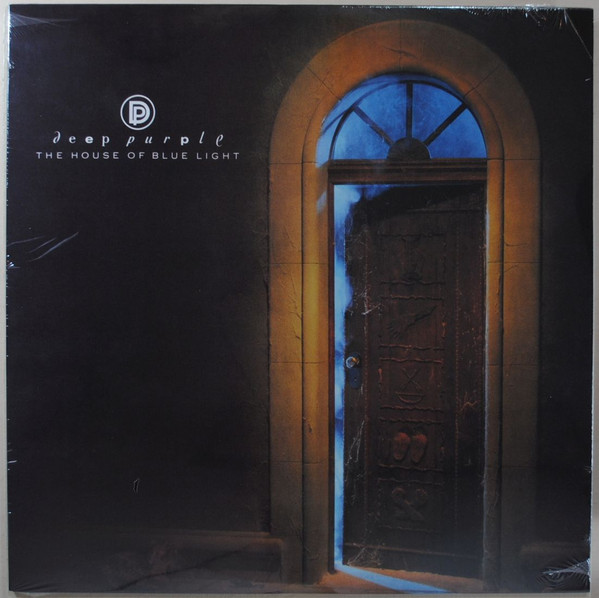
Deep Purple – The House Of Blue Light – Vinyl Record
Deep Purple – The House of Blue Light, released in January 1987, is the twelfth studio album by the legendary British hard rock band and the second album by the reunited “Mark II” lineup, which had reformed in 1984 after more than a decade apart. Coming off the commercial and critical success of Perfect Strangers (1984), The House of Blue Light was highly anticipated, but its reception and legacy remain complicated. The album showcases a band trying to balance its classic hard rock roots with the increasingly slick production and synth textures of the mid-1980s—a tension that defines both the strengths and shortcomings of the record.
From a musical standpoint, The House of Blue Light retains many of the hallmarks of the Deep Purple sound: Ritchie Blackmore’s fluid guitar riffs and solos, Ian Gillan’s powerful vocals, Jon Lord’s atmospheric keyboards, Roger Glover’s solid bass lines, and Ian Paice’s always-tight drumming. However, the overall tone of the album is noticeably more polished and keyboard-heavy, with synth textures playing a larger role than on earlier albums. While Perfect Strangers had recaptured much of the band’s classic swagger and grit, The House of Blue Light feels more sonically aligned with the era’s production trends—bigger, cleaner, and more digital, sometimes at the cost of raw energy.
The album opens with “Bad Attitude,” a track that blends sharp guitar riffs with moody synths and Gillan’s snarling vocal delivery. It sets the tone for the rest of the record: tight performances, catchy choruses, but a slightly over-processed sheen that left some longtime fans missing the more organic sound of the ’70s. “The Unwritten Law” follows with a darker, more experimental edge, while “Call of the Wild” leans into a more radio-friendly, almost AOR (album-oriented rock) sound.
Some of the album’s strongest moments come when the band taps into its bluesier, more riff-driven instincts. “Mad Dog” is a fast-paced rocker that showcases Blackmore’s flair for melodic lead work, and “Hard Lovin’ Woman” has a driving groove that could have come straight from the Burn or Machine Head era. The lengthy “Spanish Archer” stands out for its angular riffs and unusual rhythmic structure, providing a glimpse into the band’s willingness to push beyond standard hard rock formulas even in the 1980s.
Lyrically, the album oscillates between the cryptic and the cliché. Gillan’s lyrics on this album were often pointed and introspective, sometimes reflecting on aging, artistic tension, or disillusionment, though not always with the poetic depth of earlier works. The title The House of Blue Light is not actually referenced in the lyrics, but it’s believed to be a nod to an underground Las Vegas brothel—a mysterious and metaphorical phrase that adds an air of intrigue but lacks a strong narrative connection to the songs.
Despite its moments of brilliance, the album has always been surrounded by an aura of internal conflict. In later interviews, members of the band—particularly Ian Gillan and Ritchie Blackmore—expressed disappointment with the record. Gillan admitted that the band had re-recorded several parts multiple times, chasing a sound that never quite felt right, and that there was tension during the sessions. Blackmore, known for his perfectionism, also felt the album didn’t reflect the band at its best. That behind-the-scenes discontent may explain why the album sometimes feels technically proficient but emotionally distant—a band of virtuosos executing their parts well, but not always in harmony with one another.
The House of Blue Light received mixed reviews. Some praised the musicianship and songwriting, while others felt it lacked the fiery chemistry that defined the band’s classic albums. Commercially, it performed reasonably well, charting in both the US and UK and going Gold in several countries, but it did not produce major hit singles or enjoy the same longevity as Perfect Strangers.
The House of Blue Light is best appreciated as a document of a band navigating an identity crisis in an era where traditional hard rock was being eclipsed by pop-metal, synth-pop, and the early stirrings of alternative music. For fans, it remains an intriguing listen: polished, sometimes uneven, but filled with flashes of brilliance from a group of musicians whose individual talents still shone even when the cohesion faltered.
Brand new, never played and still sealed in the factory plastic but promo cut in spine
Track Listing
Bad Attitude
The Unwritten Law
Call Of The Wild
Mad Dog
Black & White
Hard Lovin’ Woman
The Spanish Archer
Strangeways
Mitzi Dupree
Dead Or Alive