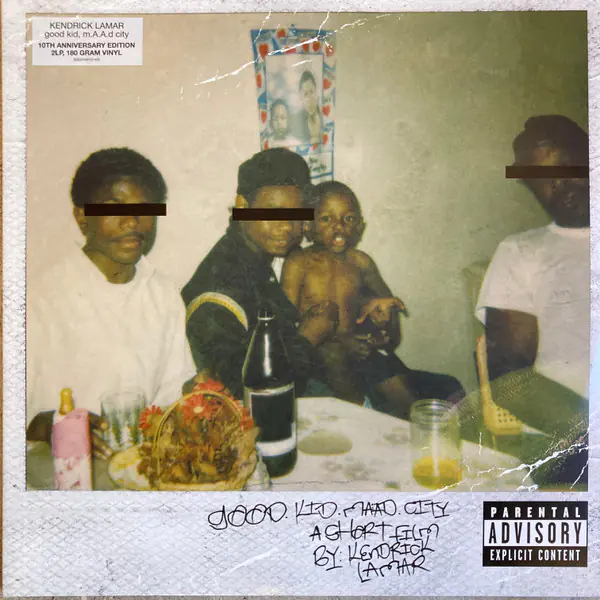
Description
Kendrick Lamar – Good Kid, M.A.A.D City – Double 180 Gram Vinyl Records
10th anniversary edition
2LP, 180 gram vinyl
Black vinyl
Good Kid, M.A.A.D City by Kendrick Lamar, released in October 2012, is widely considered one of the defining hip-hop albums of the 21st century. It’s not just a collection of songs—it’s a fully realized concept album that unfolds like a film about Lamar’s teenage life growing up in Compton, California. Kendrick even subtitled the album “A Short Film by Kendrick Lamar,” which is a perfect description of how it feels when you listen to it from beginning to end. The record uses voicemail skits from his parents, conversations between friends, and dramatic shifts in tone to create the sense that you’re following a real story rather than just listening to separate tracks.
The album’s central narrative focuses on a younger version of Kendrick navigating the pressures and dangers of life in Compton. The title itself carries multiple meanings. “Good Kid” represents Kendrick as someone who is trying to stay morally grounded and avoid the traps around him, while “M.A.A.D City” describes the chaotic environment he’s growing up in. Kendrick has explained that “M.A.A.D” can stand for phrases like “My Angry Adolescence Divided” or “My Angels on Angel Dust,” both of which capture the psychological tension of being surrounded by violence, drugs, and gang culture while still trying to hold onto personal values. Throughout the album, listeners witness how easily someone can be pulled into cycles of crime or retaliation, even if they begin with good intentions.
One of the reasons Good Kid, M.A.A.D City resonated so strongly is its storytelling detail. Kendrick doesn’t present himself as a flawless hero; instead, he portrays a confused teenager influenced by friends, curiosity, and the desire for acceptance. For example, the explosive track Backseat Freestyle captures the exaggerated bravado and wild imagination of teenage rap sessions in a car, reflecting youthful arrogance rather than genuine ambition. Later songs contrast that energy with darker moments that reveal the consequences of the lifestyle he’s observing.
A major turning point in the album’s narrative occurs with Swimming Pools (Drank), which was one of the album’s biggest hits. On the surface it sounds like a party song about drinking, but lyrically it’s actually a critique of alcohol culture and peer pressure. Kendrick describes how social environments encourage excessive drinking while masking deeper issues like insecurity and trauma. The song’s popularity is interesting because many listeners initially treated it like a celebratory drinking anthem, even though the lyrics clearly warn about addiction and self-destruction.
Another standout moment is Money Trees, featuring Jay Rock. The track explores the dream of escaping poverty and the seductive appeal of quick money in neighborhoods where opportunities feel limited. Kendrick reflects on how crime can appear glamorous when it’s one of the few visible ways to achieve success. Jay Rock’s verse reinforces that perspective by describing the mindset of someone fully immersed in that environment.
Perhaps the emotional centerpiece of the album is Sing About Me, I’m Dying of Thirst, a nearly twelve-minute track that many critics consider one of the greatest storytelling songs in hip-hop history. In it, Kendrick raps from multiple perspectives, including the brother of a woman introduced earlier in the album and a friend caught in cycles of violence. One of the most striking artistic choices is when a character’s verse abruptly cuts off mid-sentence, symbolizing a sudden death. The song then transitions into a spiritual moment about redemption and baptism, highlighting Kendrick’s recurring theme that faith and self-awareness might offer a path out of the chaos surrounding him.
Musically, the album blends classic West Coast hip-hop traditions with modern production styles. Producers like Dr. Dre, Hit-Boy, Just Blaze, and Pharrell Williams helped shape its sound. The production shifts between cinematic, atmospheric beats and aggressive, high-energy tracks that evoke the sound of 1990s Compton rap while still feeling contemporary. Songs like m.A.A.d city capture the intensity of street life with chaotic beat switches and raw verses, including a guest appearance from Compton rap veteran MC Eiht, which reinforces the album’s connection to earlier West Coast rap history.
Critically, the album was almost universally praised when it was released. Many reviewers compared its narrative depth to classic hip-hop albums like Illmatic by Nas, because both records paint vivid portraits of urban life through detailed storytelling. Good Kid, M.A.A.D City debuted at number two on the Billboard 200 and eventually became multi-platinum, but its legacy goes beyond commercial success. It established Kendrick Lamar as one of the most thoughtful and ambitious lyricists of his generation and set the stage for even more experimental and politically charged work on albums like To Pimp a Butterfly and DAMN..
What makes the album endure more than a decade later is how cohesive it feels. Every track contributes to the overarching narrative of a young man confronting the pressures of environment, friendship, temptation, and spirituality. By the end of the album, Kendrick’s story suggests that survival isn’t just about avoiding danger—it’s about understanding how your surroundings shape your choices and deciding what kind of person you want to become despite them.
Brand new, never played and still sealed in the factory plastic
Track Listing
Sherane A.K.A Master Splinter’s Daughter
Bitch, Don’t Kill My Vibe
Backseat Freestyle
The Art Of Peer Pressure
Money Trees
Poetic Justice
Good Kid
M.A.A.D City
Swimming Pools (Drank) [Extended Version]
Sing About Me, I’m Dying Of Thirst
Real
Compton