Description
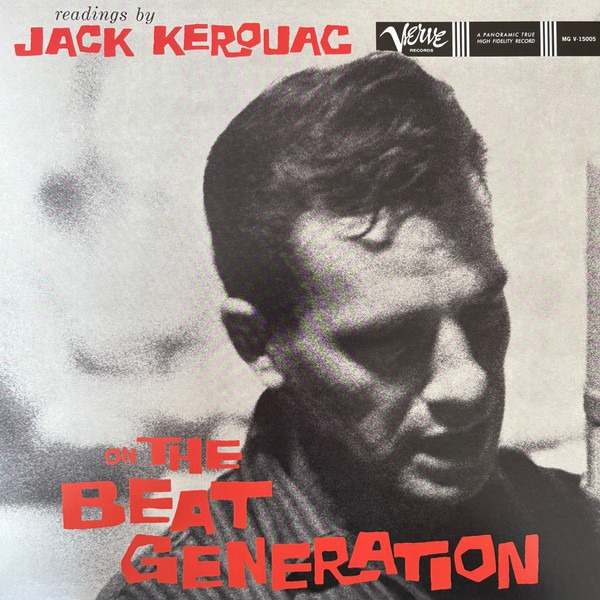
Jack Kerouac – Readings By Jack Kerouac On The Beat Generation – 180 Gram Vinyl Record
Readings by Jack Kerouac on the Beat Generation is a fascinating spoken-word recording by Jack Kerouac, offering listeners a rare opportunity to hear one of the central figures of the Beat Generation present his own work in his own voice. Originally recorded in the late 1950s, during the height of the Beat movement’s cultural impact, the album stands as both a literary document and an important historical artifact, capturing the rhythm, spontaneity, and personality that defined Kerouac’s approach to writing and performance.
Unlike a conventional music album, this recording is a spoken-word performance in which Kerouac reads selections from his novels, poetry, and prose. For readers familiar with works such as On the Road, The Dharma Bums, and his various poetic experiments, hearing the author interpret his own words adds a new dimension to the material. His voice reveals the musicality, improvisational flow, and jazz-like rhythms that were always present in his writing but are sometimes less obvious on the printed page.
Kerouac was one of the leading voices of the Beat Generation, a literary and cultural movement that emerged in postwar America alongside figures such as Allen Ginsberg and William S. Burroughs. The Beats challenged conventional social values and explored themes of personal freedom, spirituality, travel, artistic expression, and the search for authentic experience. This recording captures Kerouac articulating those ideas directly, providing insight into both the movement and the personality behind it.
One of the most striking aspects of the album is Kerouac’s delivery. His readings are not formal or theatrical in the traditional sense. Instead, they possess an improvisational quality influenced heavily by jazz, particularly bebop. Kerouac often described his writing process as spontaneous and musical, and hearing him read confirms how deeply rhythm informed his literary style. His cadence frequently resembles that of a jazz soloist, with phrases unfolding naturally and intuitively rather than according to rigid structures.
The connection between Kerouac and jazz is central to understanding the recording. Throughout his life, he admired musicians such as Charlie Parker, Dizzy Gillespie, and Thelonious Monk. Their improvisational freedom influenced his literary techniques, and this spoken-word album often feels like a literary equivalent of a jazz performance. The spontaneity of his delivery gives the words a sense of movement and immediacy that reflects the spirit of the Beat era.
The content of the readings explores many of the themes that made Kerouac such an influential writer. Travel, friendship, spirituality, restlessness, artistic aspiration, and the search for meaning appear throughout the selections. His observations range from humorous and exuberant to deeply reflective, revealing the emotional and philosophical concerns that shaped his work. Listening to these readings provides a more intimate understanding of the ideas that fueled the Beat movement.
Historically, the album occupies an important place in the development of spoken-word recordings. Long before spoken-word poetry and literary performance became widely recognized forms, Kerouac was experimenting with ways of presenting literature as an auditory experience. The recording helped blur the boundaries between literature, performance, and music, influencing later generations of poets, performers, and recording artists.
The album also serves as an invaluable document of Kerouac himself. Readers often form mental images of authors through their texts, but hearing his actual voice provides insight into his personality, humor, and emotional presence. The recording humanizes a figure who has sometimes been mythologized, allowing listeners to encounter him not as a literary icon but as a living artist sharing his work directly.
For literary scholars and fans of American culture, Readings by Jack Kerouac on the Beat Generation offers a unique window into a transformative period in twentieth-century history. The recording captures the energy of a movement that challenged established norms and encouraged new ways of thinking about art, society, and personal freedom. At the same time, it remains engaging on its own terms as a performance filled with vitality and conviction.
With its historical significance, literary richness, and distinctive performance style, Readings by Jack Kerouac on the Beat Generation stands as one of the most important spoken-word recordings of its era. The album preserves the voice of a writer whose influence extended far beyond literature, helping to shape modern ideas about creativity, individuality, and artistic expression. Energetic, reflective, and deeply human, it remains an essential document of both Jack Kerouac’s artistry and the enduring spirit of the Beat Generation.
Readings from:
Desolation Angels (An unpublished novel, Copyrighted 1959)
San Francisco Blues (An unpublished book of poetry, Copyrighted 1959)
Mexico City Blues (Grove Press, Inc., 1959)
Old Angel Midnight (City Lights Pocket Bookshop, 1959)
The Beginnings of Bop (An article from ‘Escapade’ magazine, Copyrighted 1959)
The Subterraneans (Grove Press, Inc., 1958)
Neal and the Three Stooges (A short story from ‘New Edition 2’)
Brand new, never played and still sealed in the factory plastic
Track Listing
San Francisco Scene (The Beat Generation)
San Francisco Blues (Fragments)
San Francisco
Street Scene
Money Honey
Westinghouse Elevators
Old Age
Praised Be Man
The Sad Turtle
Lucien Midnight: The Sounds Of The Universe In My Window
Excerpt 1
Excerpt 2
History Of Bop
The Subterraneans
Visions Of Neal (Neal And The Three Stooges)