Description
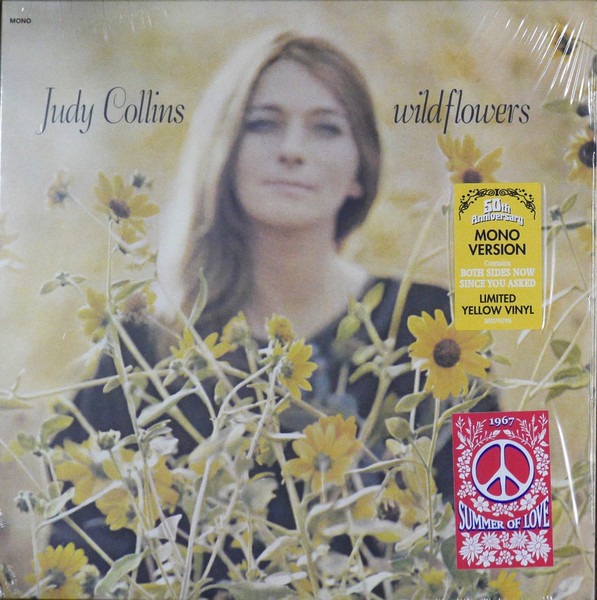
Judy Collins – Wildflowers – Yellow Vinyl Record
Wildflowers is the seventh studio album by Judy Collins, released in 1967. It is widely regarded as one of the defining albums of her career, marking her transition from a celebrated interpreter of traditional folk songs to one of the foremost champions of contemporary singer-songwriters. Blending folk, chamber pop, orchestral pop, and elements of the emerging singer-songwriter movement, Wildflowers is an elegant, emotionally rich album that captures the spirit of the late 1960s while remaining timeless.
By the mid-1960s, Collins had already established herself as one of the leading voices of the American folk revival through albums centered on traditional ballads and protest songs. With Wildflowers, she broadened her artistic scope by embracing the work of a new generation of writers, helping introduce audiences to composers whose music would soon reshape popular music.
Most notably, the album features one of the earliest recordings of Joni Mitchell’s “Both Sides, Now.” Collins recognized Mitchell’s extraordinary talent before she became widely known, and her recording of the song became an international hit, winning a Grammy Awards for Best Folk Performance and playing a major role in launching Mitchell’s career. Collins’ championing of emerging songwriters would become one of her lasting contributions to popular music.
The album balances intimate acoustic performances with tasteful orchestral arrangements. Strings, woodwinds, piano, harpsichord, and acoustic guitar are used with remarkable restraint, enriching the songs without overwhelming Collins’ voice or the emotional clarity of the lyrics.
Collins’ soprano is the album’s defining feature. Crystal-clear, expressive, and technically refined, her singing reflects both her classical training and her deep emotional sensitivity. Rather than imposing herself upon the material, she allows each song’s emotional character to emerge naturally through subtle phrasing and impeccable control.
The repertoire is exceptionally strong, featuring songs by writers including Leonard Cohen, Richard Fariña, and Joni Mitchell, alongside Collins’ own compositions. This blend of established and emerging voices gives the album both artistic breadth and historical significance.
Wildflowers explores themes of love, memory, longing, personal growth, freedom, and emotional reflection. Unlike the more overtly political folk albums of the early 1960s, these songs emphasize interior emotional landscapes, anticipating the introspective singer-songwriter movement that would flourish in the following decade.
The production is graceful and understated. Orchestral arrangements add warmth and elegance while preserving the intimacy that defines the performances. The recording has aged remarkably well, avoiding many of the excesses that characterized some late-1960s productions.
One of the album’s greatest strengths is Collins’ interpretive ability. She possesses a rare gift for identifying the emotional essence of a song and communicating it with remarkable clarity. Whether performing Mitchell’s poetic lyricism or Cohen’s introspective writing, she inhabits each composition with empathy and intelligence.
Wildflowers was both a critical and commercial success. It became Collins’ highest-charting album to that point and helped establish her as one of the most respected interpreters of contemporary songwriting. More importantly, it demonstrated that folk music could evolve gracefully into the singer-songwriter era without abandoning its artistic integrity.
Looking back, Wildflowers occupies a pivotal place in American popular music. It bridges the folk revival of the early 1960s and the explosion of singer-songwriters that followed, serving as both a culmination of one movement and a catalyst for another.
With its exquisite performances, superb song selection, and timeless production, Wildflowers remains one of Judy Collins’ greatest achievements. It captures an artist at the height of her interpretive powers while introducing audiences to some of the finest songwriting of her generation. Elegant, emotionally profound, and beautifully crafted, the album continues to stand as one of the essential recordings of the late-1960s folk and singer-songwriter tradition.
Brand new, never played and still sealed in the factory plastic
Track Listing
Michael From Mountains
Since You Asked
Sisters Of Mercy
Priests
A Ballata Of Francesco Landini – Lasso! Di Donna
Both Sides Now
La Chanson Des Vieux Amants (The Song Of Old Lovers)
Sky Fell
Albatross
Hey, That’s No Way To Say Goodbye