
Description
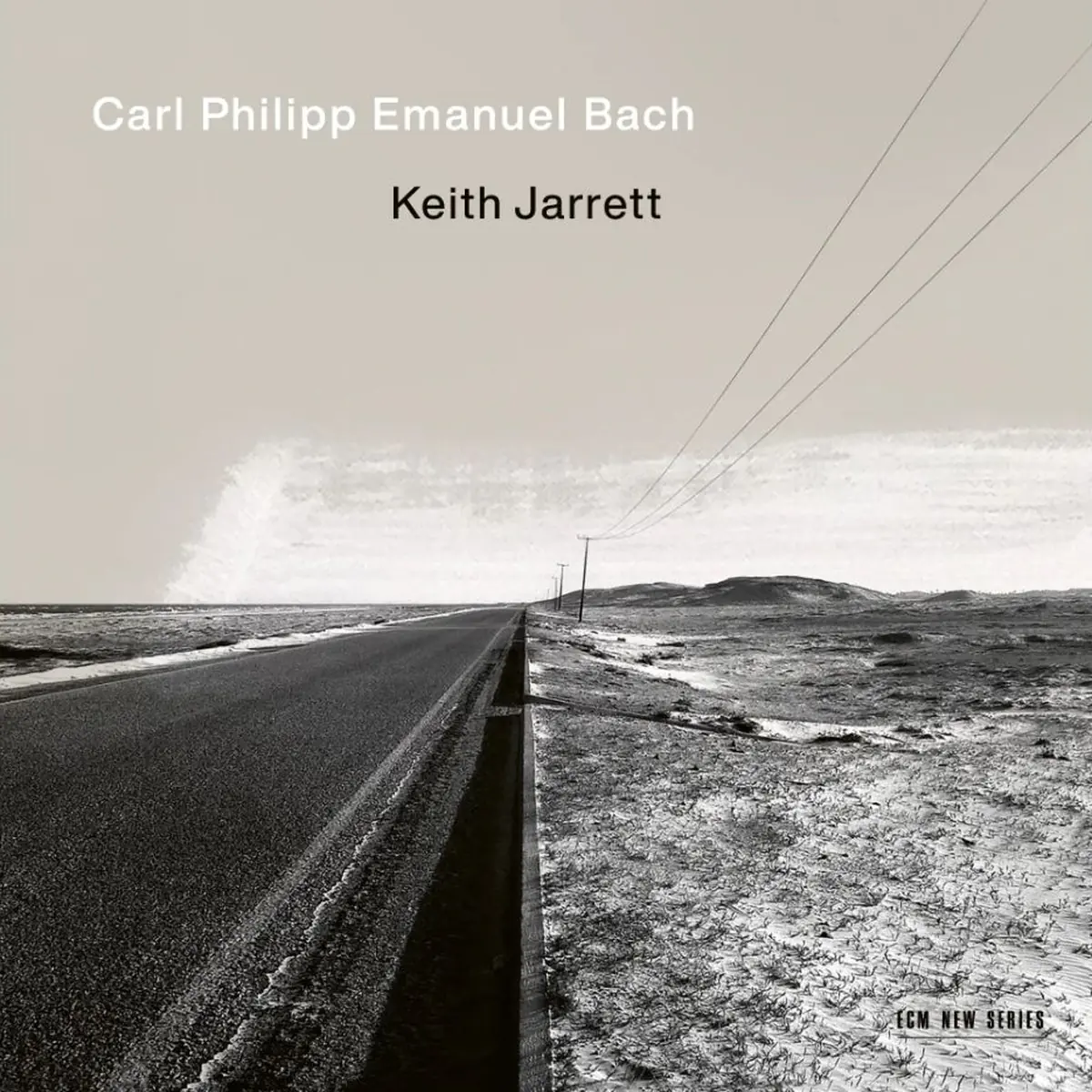
Keith Jarrett – Carl Philipp Emanuel Bach: Württemberg Sonatas – Double Vinyl Record
Keith Jarrett’s recording of Carl Philipp Emanuel Bach’s Württemberg Sonatas comes from May 1994, when the pianist was deeply engaged with keyboard music from the Bach family. He had heard these works played on harpsichord and believed their expressive possibilities could be opened differently on a modern piano. The six sonatas, composed in the 1740s and cataloged as Wq 49, stand at the threshold between Baroque rhetoric and the more volatile emotional language of the Classical era. Jarrett approaches that instability directly, allowing sudden turns of mood and articulation to register without forcing the music into romantic grandeur.
The first sonata in A minor begins with a Moderato whose measured surface contains continual shifts of emphasis. Jarrett gives the Andante room to speak, then brings a taut, clear profile to the Allegro assai. The A-flat-major second sonata changes the palette immediately; its opening Un poco allegro has an elegant lift, while the Adagio lets ornament and harmonic suspense carry the expression. In the closing Allegro, Jarrett’s control of touch keeps the contrapuntal detail distinct even when the music becomes more animated. The piano’s dynamic range is used carefully, not as an excuse to enlarge every contrast.
Sonata III in E minor completes the first record with an Allegro, Adagio and Vivace that reveal C.P.E. Bach’s taste for interruption and surprise. Jarrett follows the music’s rhetorical shape, giving short gestures the weight of spoken phrases. On the second record, the B-flat-major Sonata IV returns to a brighter key but not to predictability. Its Andante sits between two quicker movements, and Jarrett makes the center feel reflective without breaking the work’s continuity. The E-flat-major Sonata V then sharpens the contrast between poised outer movements and a concentrated Adagio.
The cycle ends with Sonata VI in B minor, whose Moderato, Adagio non molto and Allegro bring the set to its most searching conclusion. Across all eighteen movements, Jarrett avoids the mechanical regularity that can flatten eighteenth-century keyboard music. Tempos breathe, ornaments function as expressive events, and repeated figures change character through touch and voicing. At the same time, he maintains a disciplined respect for the scores. Listeners familiar with his improvised concerts will recognize the concentration and control of resonance, but the personality of the composer remains central.
The sessions took place at Cavelight Studio, Jarrett’s home recording space, and then remained unreleased for nearly three decades. ECM first issued the performance in 2023; this two-LP edition followed in 2024 under the ECM New Series imprint. The records are housed in a tip-on gatefold package with notes by Paul Griffiths. The distributor barcode omitted its leading zero, but catalog number 485 9117 and EAN 0028948591176 identify this exact vinyl release. It should not be confused with the two-CD edition, which shares the cover and program but uses a different physical configuration.
This recording expands the documented classical side of Jarrett’s career in a meaningful way. His Bach, Handel, Mozart and Shostakovich performances were never separate from his broader concern with line, structure and the acoustics of the piano; the Württemberg Sonatas bring those interests to music whose emotional quickness is unusually compatible with his touch. The complete sequence rewards unhurried listening because relationships emerge across the keys and movement types. Rather than presenting C.P.E. Bach as a historical bridge between famous relatives and successors, Jarrett treats him as a composer of vivid, unsettled music in his own right.
Brand new, never played and still sealed in the factory plastic





Reviews
There are no reviews yet.