
Description
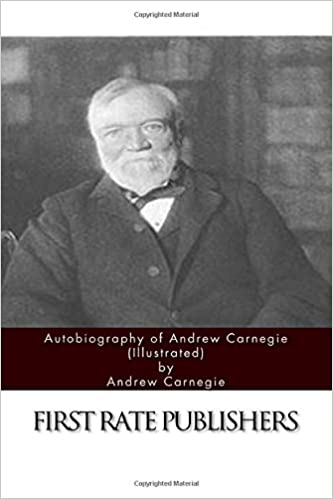
The Autobiography of Andrew Carnegie – Paperback Book
The Autobiography of Andrew Carnegie provides an intimate look into the life of one of the most influential industrialists and philanthropists in American history. Published posthumously in 1920, this autobiography details Carnegie’s rise from a poor Scottish immigrant to one of the wealthiest men in the world, known for his extensive contributions to public libraries, education, and
Andrew Carnegie was born in 1835 in Dunfermline, Scotland, and immigrated to the United States with his family in 1848. Carnegie’s autobiography begins by recounting his humble beginnings in Scotland and the struggles his family faced, which laid the foundation for his work ethic and his drive to succeed.
Carnegie’s rise started in the railroad industry, where he learned valuable lessons about management and investment. He later moved into the steel industry, where he made the bulk of his fortune. Carnegie Steel became the largest and most profitable industrial enterprise in the world at the time. In his autobiography, Carnegie discusses his business practices, his philosophy on wealth, and the importance of adopting new technologies and methodologies, such as the Bessemer process for steel manufacturing.
A significant part of the autobiography is dedicated to Carnegie’s philosophy of wealth, which he famously outlined in his essay ‘The Gospel of Wealth.’ He believed that the wealthy have a moral obligation to distribute their wealth in ways that promote the welfare and happiness of the common man. This belief drove him to donate more than $350 million to various philanthropic causes, including libraries, schools, and universities.
Carnegie’s autobiography also touches on his life after retiring from business. He dedicated his remaining years to philanthropy and intellectual pursuits. His efforts in peace initiatives and international arbitration are highlighted, reflecting his growing concern for global peace and progress.
The Autobiography of Andrew Carnegie is not just a narrative of personal success; it is also a document reflecting the industrial age’s socio-economic impacts and the responsibilities of the wealthy. Carnegie’s insights into business practices, wealth management, and philanthropy continue to be studied and admired.
This autobiography offers readers a firsthand account of Andrew Carnegie’s thoughts, motivations, and decisions throughout his life. It provides valuable lessons on entrepreneurship, ethics, and philanthropy, making it a significant work for anyone interested in American history, business studies, or philanthropic philosophy.
The autobiography of Andrew Carnegie details the famous industrialist’s life and includes illustrations.
Andrew Carnegie was an immigrant, a poor boy who worked in a cotton mill, a man who amassed a great fortune as a steel baron and then became one of the most generous and influential philanthropists the world has ever known. His famous dictum, that he who dies rich dies disgraced, has inspired philanthropists and philanthropic enterprises for generations.
During his own lifetime, he put his ideas into action by creating a family of organizations that continue to work toward improving the human condition, advancing international peace, strengthening democracy, and creating societal progress that benefits men, women, and children in the United States and around the globe.Here, in his own words, Mr. Carnegie tells the dramatic story of his life and career, outlining the principles that he lived by and that today serve as the pillars of modern philanthropy.
Brand New
UPC – 9781610390828
Pages – 232


