Description
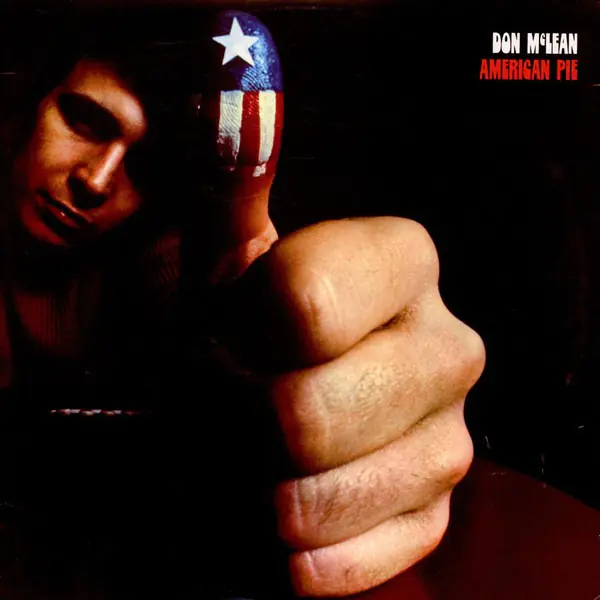
Don McLean – American Pie – Vinyl Record
American Pie, released in October 1971, is the second studio album by American singer-songwriter Don McLean, and it became an instant classic thanks to its title track — one of the most famous and enduring songs in American popular music. While best remembered for the sprawling, eight-and-a-half-minute epic “American Pie,” the album as a whole demonstrates McLean’s gift for blending folk, rock, country, and pop with poetic storytelling and emotional depth. It’s both a product of its time — reflecting on the turbulence and disillusionment of the late 1960s — and a timeless collection of songs about love, memory, and the American experience.
The title track, “American Pie,” is the album’s centerpiece and cultural landmark. Written as a nostalgic meditation on the loss of innocence in American music and society, it famously references “the day the music died” — the 1959 plane crash that killed Buddy Holly, Ritchie Valens, and the Big Bopper. But the song stretches far beyond that moment, weaving together cryptic allusions to rock ’n’ roll history, political upheaval, and McLean’s own sense of generational loss. Its singalong chorus, “Bye, bye Miss American Pie…”, became iconic, while its verses inspired decades of debate and interpretation. Despite (or perhaps because of) its ambiguity, the song struck a chord worldwide, topping the charts in the U.S. and beyond.
Yet the album is far richer than its title track alone. “Vincent,” another standout, is a tender, heartbreaking tribute to painter Vincent van Gogh. With its gentle acoustic guitar and vivid lyrical imagery (“Starry, starry night…”), the song paints both admiration for the artist’s genius and sorrow for his suffering. It reached #12 on the Billboard Hot 100 and became one of McLean’s most beloved compositions, showcasing his sensitivity and skill as a balladeer.
Other tracks expand the album’s range. “Till Tomorrow” and “Empty Chairs” are intimate folk ballads filled with longing and melancholy. “Crossroads” blends gospel-tinged piano with themes of searching and faith. “Babylon,” adapted from the Old Testament Psalm 137, closes the album with a haunting, hymn-like quality, connecting McLean’s folk roots to spiritual tradition. Even lesser-known songs like “Winterwood” and “Everybody Loves Me, Baby” demonstrate his ability to move from quiet introspection to biting satire.
American Pie is a blend of folk lyricism, rock energy, and pop accessibility. The arrangements are relatively sparse compared to the heavily produced albums of the era, keeping McLean’s voice and acoustic guitar at the forefront. His singing is earnest and emotive, capable of carrying both the intimate ballads and the sweeping title epic.
The album was a major commercial success, reaching #1 on the Billboard 200 and going multi-platinum. More importantly, it cemented McLean’s reputation as one of the premier singer-songwriters of the 1970s. Though he never again matched the cultural impact of “American Pie,” the album as a whole proved he was far more than a one-hit wonder, with “Vincent” and other tracks ensuring his lasting legacy.
American Pie stands as both a time capsule of early 1970s America and a timeless folk-rock classic. Its mixture of personal reflection, cultural commentary, and poetic songwriting captured a moment of disillusionment in American life, while its melodies and themes continue to resonate across generations. For many, it remains one of the defining albums of the singer-songwriter era, and for McLean, it secured a permanent place in the pantheon of American music.
Brand new, never played and still sealed in the factory plastic
Track Listing
American Pie
Till Tomorrow
Vincent
Crossroads
Winterwood
Empty Chairs
Everybody Loves Me, Baby
Sister Fatima
The Grave
Babylon