Description
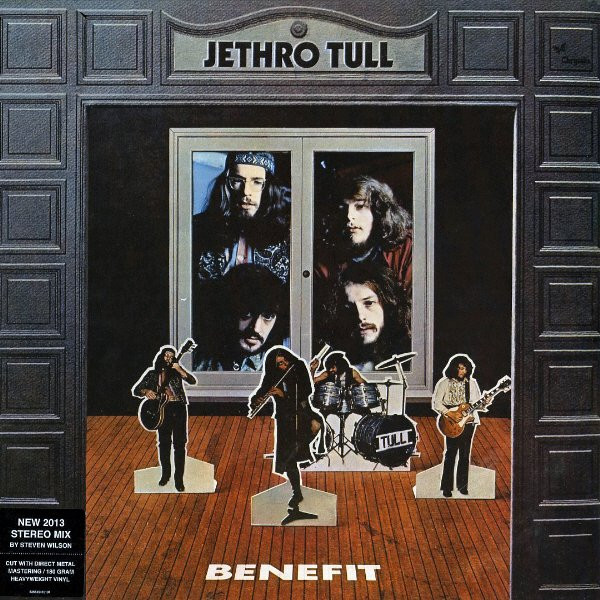
Jethro Tull – Benefit – 180 Gram Vinyl Record
NEW 2013 STEREO MIX by Steven Wilson
Cut with direct metal mastering / 180 gram
heavyweight vinyl
A Transitional Rock Album That Paved the Way for Progressive Rock Mastery
Released in April 1970 in the U.K. and a month later in the U.S., Benefit is the third studio album by British rock band Jethro Tull and a pivotal moment in their discography. Following the bluesy debut This Was (1968) and the more eclectic and folk-tinged Stand Up (1969), Benefit showcased a band in transition, blending their roots in blues and folk-rock with a darker, heavier sound that leaned toward progressive rock. It was the first Jethro Tull album to feature keyboardist John Evan, who would soon become a full-time member, and it marked a period when frontman Ian Anderson was taking firm control of the band’s direction. With heavier guitar riffs from Martin Barre, steady bass lines from Glenn Cornick, and the powerful drumming of Clive Bunker, the record delivered a distinctive sound that pushed Jethro Tull closer to the ambitious, conceptual rock albums that would soon define their career.
Recorded at Morgan Studios in London, Benefit was also the first Jethro Tull album engineered by Robin Black, who would go on to work with the band throughout the 1970s. The sessions reflected the band’s grueling touring schedule and Anderson’s growing frustration with the music industry, themes that find their way into the album’s lyrics. Many of the songs deal with feelings of isolation, disillusionment, and the personal cost of fame, giving the record a more cynical and world-weary tone than its predecessor. Despite this, Benefit also demonstrated Ian Anderson’s ability to balance biting social commentary with poetic lyricism, setting the stage for the narrative-driven albums to come.
The opening track, “With You There to Help Me,” immediately signals a shift from the lighter tones of Stand Up. Beginning with eerie flute and piano passages, the song quickly builds into a full rock arrangement dominated by Barre’s heavy guitar riffs. Anderson’s lyrics evoke themes of dependence and support, layered with ambiguity that typifies much of his writing. “Nothing to Say” continues the darker mood, featuring a driving rhythm and lyrics reflecting frustration and alienation, underpinned by Barre’s biting guitar lines. “Alive and Well and Living In” provides a shorter, folk-tinged interlude that contrasts nicely with the album’s heavier material, while “Son” stands out as one of the record’s most aggressive tracks, with confrontational lyrics inspired by Anderson’s own father and some of Barre’s fiercest guitar playing.
One of the most remarkable songs on Benefit is “For Michael Collins, Jeffrey and Me,” a reflective ballad referencing astronaut Michael Collins—who orbited the Moon during the Apollo 11 mission while Neil Armstrong and Buzz Aldrin made history on the lunar surface—as well as Anderson’s childhood friend Jeffrey Hammond (later Jeffrey Hammond-Hammond, who would eventually join Jethro Tull). The lyrics contemplate themes of isolation, missed opportunities, and loneliness, offering a poignant counterpoint to the album’s heavier tracks. “To Cry You a Song” is another standout, built around a muscular guitar riff and featuring one of Anderson’s most memorable vocal performances of the period. Its combination of raw rock energy and lyrical melancholy made it a live favorite for years.
The second half of the album continues to explore both heavy rock and introspective balladry. “A Time for Everything?” balances folk-inspired flute passages with gritty guitar, while “Inside” provides one of the album’s more upbeat moments, a lighter tune that still carries Anderson’s introspective lyricism. “Play in Time” is one of the most experimental tracks, notable for its backwards tape effects and chaotic energy, demonstrating the band’s willingness to push the boundaries of studio technology. Finally, the album closes with “Sossity; You’re a Woman,” a haunting acoustic ballad that blends classical influences with poetic lyrics, serving as a quiet yet powerful conclusion that contrasts with the riff-heavy songs that dominate much of the record.
Benefit was met with solid commercial success. In the United States, it became Jethro Tull’s first Top 20 album, reaching No. 11 on the Billboard 200, while in the U.K. it peaked at No. 3. Critics at the time were divided, with some praising its heavier direction and others unsure how to categorize the band’s evolving style. Over time, however, the record has been reappraised as an underrated gem in Jethro Tull’s catalog, admired for its darker atmosphere, heavier sound, and transitional role in the band’s journey toward progressive rock greatness. Tracks like “To Cry You a Song” and “Sossity; You’re a Woman” have become fan favorites, while deeper cuts like “For Michael Collins, Jeffrey and Me” showcase Anderson’s growing ambition as a lyricist.
The legacy of Benefit lies in its position as a bridge between Jethro Tull’s early blues-folk experimentation and their later progressive rock masterpieces. While albums like Aqualung (1971) and Thick as a Brick (1972) would go on to define the band’s 1970s peak, Benefit is essential for understanding how Jethro Tull developed their unique sound. Its mix of heavy guitar riffs, introspective acoustic pieces, and experimental studio effects gave listeners a preview of the eclecticism that would become their hallmark. For modern audiences, the album remains a compelling listen, offering both the raw energy of classic rock and the thoughtful depth of progressive music.
Jethro Tull – Benefit (1970) is a transitional masterpiece that captures the band at a crucial turning point. With powerful tracks like “With You There to Help Me,” “Nothing to Say,” “To Cry You a Song,” and the haunting closer “Sossity; You’re a Woman,” the album blends heavy rock riffs, poetic lyrics, and experimental arrangements into a body of work that remains compelling more than fifty years later. Though often overshadowed by Aqualung and Thick as a Brick, Benefit stands as one of Jethro Tull’s most underrated albums and a key chapter in the evolution of progressive rock.
Brand new, never played and still sealed in the factory plastic
Track Listing
With You There To Help Me
Nothing To Say
Alive And Well And Living In
Son
For Michael Collins, Jeffrey And Me
To Cry You A Song
A Time For Everything?
Inside
Play In Time
Sossity; You’re A Woman