Description
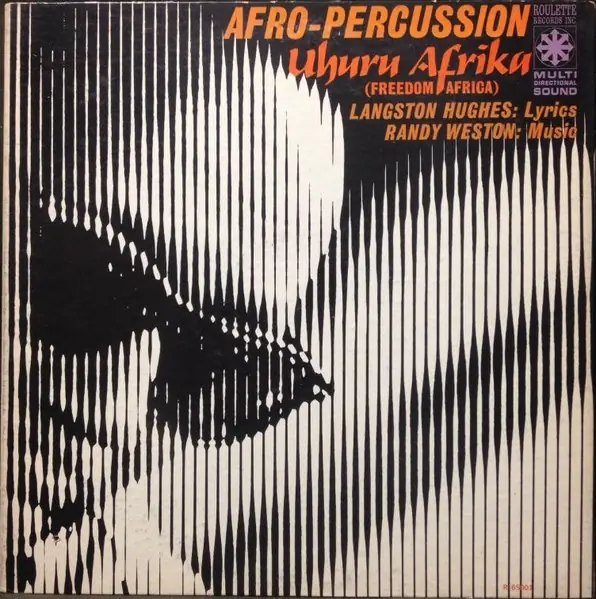
Langston Hughes and Randy Weston – Uhuru Afrika (Freedom Africa) – Vinyl Record
Langston Hughes & Randy Weston – Uhuru Afrika (Freedom Africa), released in 1960, is a landmark recording that blends jazz, African rhythms, and spoken word poetry into a politically charged and spiritually rich work of art. Spearheaded by pianist and composer Randy Weston and featuring lyrics by legendary poet Langston Hughes, Uhuru Afrika (Swahili for “Freedom Africa”) was both a musical celebration of African liberation movements and a bold declaration of pan-African identity at a time when decolonization was sweeping the continent.
This ambitious project is more than a jazz album—it’s a musical suite, arranged and conducted by the brilliant Melba Liston, one of the few prominent female arrangers in jazz history. Weston, who had long been drawn to African music and culture, saw this album as a way to connect African American jazz back to its ancestral roots in the African continent. His compositions evoke both the power and joy of freedom and the deep sorrow of colonial oppression, using an expansive palette of sounds and structures.
The album is divided into four movements:
“Introduction: Uhuru Kwanza” – A solemn and majestic opening that features a spoken prologue by Langston Hughes, delivered in rich tones over an atmospheric backdrop. Hughes declares, “Freedom! Uhuru!”—setting the tone with a powerful invocation of unity, resistance, and hope. It’s a direct call to consciousness and a tribute to the African nations breaking free from colonial rule.
“African Lady” – Perhaps the most accessible and melodically memorable track, this features beautiful choral work, strong blues undercurrents, and Weston’s lyrical piano lines. It’s a tribute to African womanhood and resilience.
“Bantu” – A vibrant, rhythm-heavy piece that showcases African percussion and complex polyrhythms, merging traditional African drumming with jazz improvisation. It’s a dynamic representation of cultural fusion.
“Kucheza Blues” – A celebratory finale, integrating blues motifs with African dance rhythms in a way that bridges the Atlantic, tracing a direct line between African music and the African American blues tradition.
The personnel on Uhuru Afrika reads like a who’s who of jazz greats, including:
Clark Terry (trumpet)
Freddie Hubbard
Slide Hampton (trombone)
Yusef Lateef (flute, oboe)
Max Roach (drums)
Candido Camero (congas)
Ron Carter (bass)
The choral and vocal arrangements add another layer of richness, with lyrics that blend Swahili, English, and African dialects—reflecting a pan-African ethos and underscoring the political and cultural unity the album advocates.
At the time of its release, Uhuru Afrika was not only musically groundbreaking, but also politically provocative. In fact, the album was banned in apartheid-era South Africa, deemed subversive by the regime due to its bold celebration of African identity and anti-colonial sentiment.
Uhuru Afrika has been recognized as one of the first major jazz albums to explicitly align itself with African liberation, setting a precedent for later politically conscious works by artists like Pharoah Sanders, John Coltrane, and Abbey Lincoln & Max Roach. It stands at the intersection of jazz, Black liberation, poetry, and global consciousness—a shining example of how music and art can be used to speak truth to power and reclaim cultural heritage.
Uhuru Afrika is not just an album—it’s a cultural milestone, a sonic declaration of freedom, identity, and unity across the African diaspora. If you’re exploring the roots of spiritual jazz, pan-African music movements, or poetry-meets-music collaborations, this record is absolutely essential.
Brand new, never played and still sealed in the factory plastic
Track Listing
Introduction
Uhuru Kwanza
African Lady
Bantu
Kucheza Blues