Description
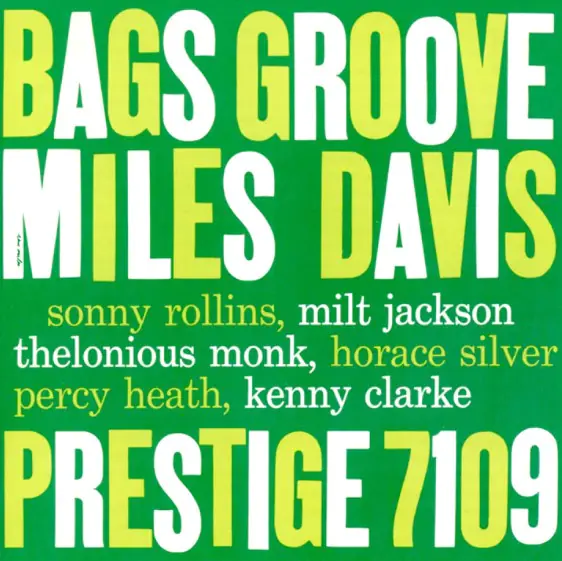
Miles Davis – Bags Groove – Vinyl Record
Released in 1957 on Prestige Records, Bags’ Groove captures Miles Davis in a transitional yet commanding moment—bridging the cool lyricism of the early ’50s and the hard bop intensity that would define the latter half of the decade. The album is drawn primarily from 1954 sessions and is especially notable for its collaboration with vibraphonist Milt “Bags” Jackson, whose blues-rooted swing gives the record both warmth and propulsion.
The title track, “Bags’ Groove,” appears in two takes and serves as the album’s centerpiece. Built on a simple 12-bar blues structure, it becomes a study in contrast and restraint. Jackson opens with a relaxed, earthy solo, his vibraphone lines fluid and deeply grounded in bebop tradition. When Miles enters, he pares the harmony down dramatically—famously insisting on sparse piano accompaniment. Pianist Thelonious Monk (present at the session) sits out during Miles’ solo, resulting in a striking openness. Davis’ muted trumpet phrases are economical and cool, each note carefully placed, creating tension through space rather than density. The performance demonstrates Miles’ emerging aesthetic: less is more, and mood can outweigh technical flash.
The supporting cast across the album includes major figures of the era—Sonny Rollins on tenor saxophone, Horace Silver and Thelonious Monk on piano (on different tracks), Percy Heath on bass, and Kenny Clarke on drums. On “Airegin” (a Rollins composition first recorded on Miles Davis and the Modern Jazz Giants), the tempo lifts, and the ensemble’s hard bop drive comes to the fore. Rollins’ muscular tenor contrasts beautifully with Davis’ cooler phrasing, while Silver’s comping adds rhythmic bite.
“Dr. Jackle,” also penned by Rollins, leans into a more playful, bop-oriented feel, with intricate melodic lines and tight rhythmic interplay. Meanwhile, “But Not for Me” offers a slower, lyrical reading of the Gershwin standard, showcasing Davis’ gift for ballad interpretation—his tone intimate, slightly melancholic, and deeply expressive without embellishment.
What makes Bags’ Groove historically significant is how it captures Miles experimenting with ensemble texture and authority in the studio. His insistence on space, his selective use of mute, and his control over session dynamics foreshadow the disciplined minimalism that would later define Kind of Blue. At the same time, the album remains rooted in blues feeling and bebop vocabulary, reflecting the fertile post-bop landscape of mid-’50s New York.
The production, typical of Prestige during this period, is direct and unvarnished. There’s a live-in-the-room immediacy—less polished than Columbia’s later recordings with Miles, but rich in atmosphere. The interplay between vibraphone and trumpet is particularly distinctive; Jackson’s shimmering sustain complements Davis’ clipped, breathy lines, creating a dialogue between resonance and restraint.
In the broader arc of Miles Davis’ career, Bags’ Groove may not be as revolutionary as his late-’50s modal work, but it stands as a crucial document of his artistic evolution. It reveals a bandleader asserting aesthetic control and refining a voice that would soon reshape modern jazz. Rooted in blues structure yet forward-looking in conception, Bags’ Groove remains one of the essential mid-’50s sessions—a meeting of giants where economy, swing, and subtlety reign supreme.
Brand new, never played and still sealed in the factory plastic
Track Listing
Bags’ Groove (Take 1)
Bags’ Groove (Take 2)
Airegin
Oleo
But Not For Me (Take 2)
Doxy
But Not For Me (Take 1)