Description
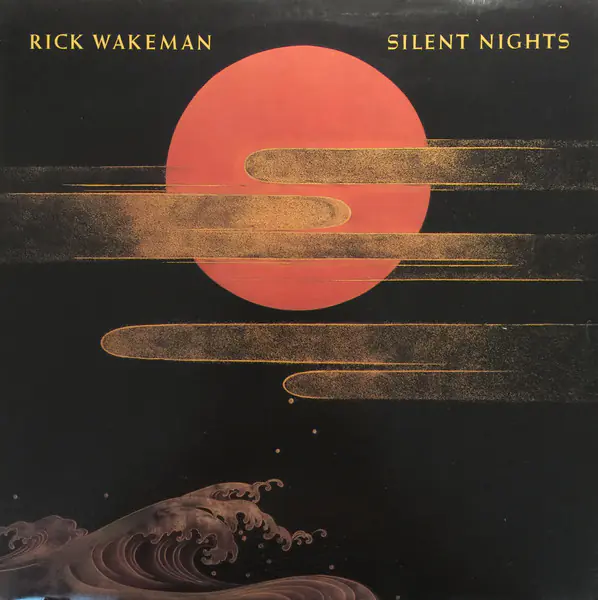
Rick Wakeman – Silent Nights – Vinyl Record
If you came to Silent Nights hoping for another sprawling fantasy in the vein of The Six Wives of Henry VIII or Journey to the Centre of the Earth, you might initially wonder whether you’re listening to the same artist. Released in 1985, Silent Nights finds Rick Wakeman embracing concise, song-driven rock at a time when progressive rock veterans were trying to find their place in a musical landscape dominated by MTV, synth-pop, and arena rock. Rather than chasing his past, Wakeman chose to meet the decade on its own terms.
That decision makes Silent Nights one of the more unusual entries in his enormous catalog. Instead of instrumental showcases built around banks of keyboards, these are structured songs with verses, choruses, and strong vocal performances by Gordon Neville. Wakeman remains the album’s musical architect, but he’s surprisingly willing to step back, allowing the songs themselves to take center stage.
The production is unmistakably mid-1980s, but not in an overwhelming way. Bright synthesizers, punchy drums, layered guitars, and polished vocal harmonies place the album firmly in its era, yet there’s enough warmth in the arrangements to prevent it from sounding like a collection of dated studio tricks. Wakeman’s keyboards still provide the album’s signature character, but they’re integrated into the band rather than dominating every track.
One of the pleasures of Silent Nights is hearing Wakeman write within tighter boundaries. Progressive musicians are often at their most interesting when forced to exercise restraint, and that’s exactly what happens here. His gift for memorable melodies, sophisticated chord changes, and colorful arrangements survives the move to shorter songs. The music remains recognizably his, even when it trades twenty-minute epics for four-minute rock songs.
The album also benefits from a strong supporting cast. Guitar work adds both texture and energy without turning the record into a hard rock affair, while the rhythm section gives the songs a steady, confident pulse. Everything feels carefully balanced. Nobody is trying to steal the spotlight, and that sense of ensemble playing helps the record maintain a relaxed confidence throughout.
Lyrically, Silent Nights is more grounded than much of Wakeman’s earlier work. Instead of drawing on mythology, history, or literary concepts, the songs focus on relationships, ambition, memory, and personal reflection. They fit comfortably alongside the polished adult-oriented rock that flourished during the decade, but the harmonic richness of the music keeps them from becoming generic.
Perhaps the biggest surprise is “Glory Boys,” one of the album’s standout tracks. It has the kind of memorable chorus and polished arrangement that could easily have become a much bigger hit under different circumstances. Like much of the record, it demonstrates that Wakeman understood contemporary songwriting without sacrificing his own musical personality.
Because it sits outside the narrative most fans tell about Rick Wakeman’s career, Silent Nights is often overlooked. It lacks the conceptual grandeur of his classic 1970s releases and the virtuosic instrumental focus that many listeners associate with his name. But that’s precisely why it’s worth revisiting. It reveals a musician who was adaptable enough to explore new formats without simply following fashion.
Listening today, the album feels less like an attempt to reinvent Rick Wakeman than an experiment in applying his considerable compositional skills to a different musical language. Not every experiment is equally successful, but the sincerity behind it is unmistakable. Rather than sounding like a keyboard legend reluctantly chasing the 1980s, Silent Nights sounds like an artist genuinely curious about what his music could become.
It may never rank among Wakeman’s defining works, but it deserves far more attention than it usually receives. Beneath its polished production is a collection of thoughtfully crafted songs, imaginative arrangements, and understated musicianship from an artist who refused to stand still. For listeners willing to set aside expectations of capes, Moog solos, and concept-album spectacle, Silent Nights offers a rewarding glimpse of Rick Wakeman exploring another side of his remarkably varied career.
Brand new, never played and still sealed in the factory plastic
Track Listing
Tell ‘Em All You Know
The Opening Line
The Opera
Man’s Best Friend
Glory Boys
Silent Nights
Ghost Of A Rock And Roll Star
The Dancer
Elgin Mansions
That’s Who I Am