Description
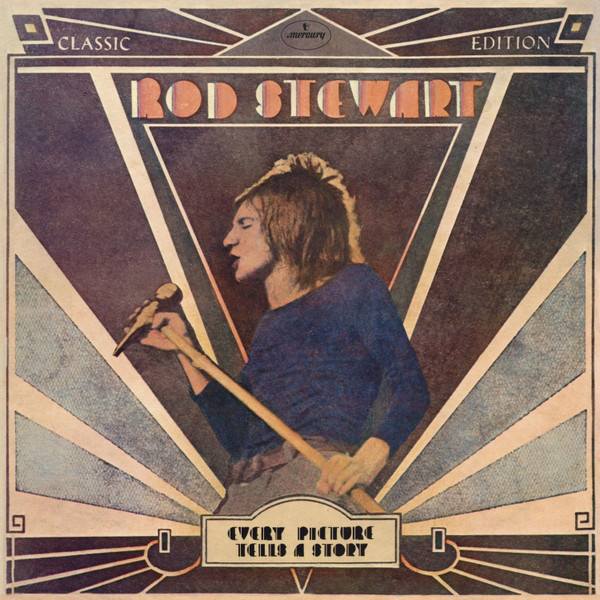
Rod Stewart – Every Picture Tells A Story – 180 Gram Vinyl Record
Rod Stewart’s Every Picture Tells a Story, released in May 1971, is widely regarded as the defining album of his early solo career and one of the landmark records of the early 1970s rock era. Blending folk, blues, soul, country, and rock with remarkable ease, the album showcases Stewart at his most unfiltered — both vocally and emotionally. It’s a record steeped in storytelling, carried by raw acoustic instrumentation and Stewart’s raspy, unmistakable voice. At a time when the boundaries between rock and roots music were increasingly porous, Every Picture Tells a Story stood out for its cohesion, sincerity, and stylistic freedom.
The album’s most iconic track is undoubtedly “Maggie May,” a semi-autobiographical ballad about a young man’s entanglement with an older woman. Initially released as the B-side to the title track, it unexpectedly became a massive hit, topping both the US and UK charts and helping to propel the album to commercial success. “Maggie May” is driven by a 12-string guitar riff and a mandolin solo by Ray Jackson (from Lindisfarne), which became one of the most recognizable melodic hooks in rock history. Stewart’s bittersweet lyrics, which mix infatuation with regret and emotional confusion, resonated deeply with audiences, elevating the song to classic status.
Beyond “Maggie May,” the album is rich with gems. The title track “Every Picture Tells a Story” is a rollicking, almost chaotic opener — part travelogue, part rebellious youth anthem — with lyrics that are at once swaggering and introspective. Stewart is joined throughout the record by members of The Faces, including guitarist Ron Wood (who co-produced the album with Stewart), and other musicians like Micky Waller on drums and Pete Sears on piano. This loose, pub-rock sensibility gives the album a lived-in warmth and spontaneity. Tracks like “Mandolin Wind” offer aching vulnerability, while Stewart’s covers — such as Bob Dylan’s “Tomorrow Is a Long Time” and the traditional spiritual “(I Know) I’m Losing You” — reflect his gift for interpreting other people’s material in a way that makes it entirely his own.
What makes Every Picture Tells a Story so enduring is its balance of grit and grace. It doesn’t sound like it was designed to be a polished studio masterpiece — and that’s exactly its charm. The album has a rough-hewn quality that matches the emotional honesty of the lyrics. There’s humor, heartache, bravado, and a touch of recklessness running through every track. It’s a reflection of Stewart’s own musical identity at the time: somewhere between the raucous blues-rock of The Faces and the introspective storytelling of folk troubadours.
The album was a breakthrough. It topped the charts in both the UK and the US — a rare feat at the time — and it established Rod Stewart not just as a singer with a distinctive voice, but as a serious artist in his own right. Over the years, it has regularly appeared on “greatest albums” lists (including Rolling Stone’s 500 Greatest Albums of All Time), praised for its emotional range, songwriting, and performances.
In hindsight, Every Picture Tells a Story captures a unique moment in Rod Stewart’s career, before the glossier pop direction of his late-’70s and ’80s work. It’s raw, soulful, and deeply personal — a portrait of a young artist with an old voice, telling stories that still resonate more than five decades later.
Brand new, never played and still sealed in the factory plastic
Track Listing
Every Picture Tells A Story
Seems Like A Long Time
That’s All Right
Amazing Grace
Tomorrow Is A Long Time
Link Music – Henry’s Time
Maggie May
Mandolin Wind
(I Know) I’m Losing You
Reason To Believe