Description
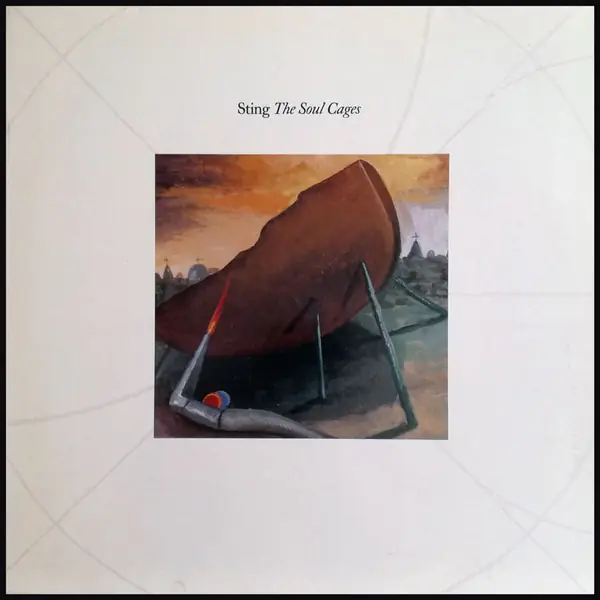
Sting – The Soul Cages – Vinyl Record
Sting’s The Soul Cages, released on January 21, 1991, is one of the most personal and thematically unified albums of his career. Written in the aftermath of his father’s death in 1987, the record channels Sting’s grief, introspection, and attempts at reconciliation with his past into a dark, maritime-inspired cycle of songs. Where his previous solo efforts (The Dream of the Blue Turtles in 1985 and …Nothing Like the Sun in 1987) had explored politics, jazz, and pop accessibility, The Soul Cages is stark, brooding, and deliberately less commercial. It represents Sting at his most literary, weaving together themes of death, loss, the sea, and renewal into a cohesive narrative.
Sting had experienced both writer’s block and personal turmoil leading up to this album. His father’s passing left him grappling with unresolved tensions, guilt, and a sense of displacement. These emotions coalesced into an album steeped in maritime imagery: the sea becomes a metaphor for death, inheritance, escape, and rebirth. The songs are populated with sailors, fishermen, shipyards, and mythical figures, giving the record a mythic, almost allegorical weight. For Sting, who grew up in the English shipbuilding town of Wallsend, the imagery also reflects his own working-class roots and complicated relationship with home and family.
The Soul Cages is a fusion of rock, jazz, and folk elements, but with a somber, atmospheric edge. It leans on layered textures, unusual rhythms, and extended harmonies, showcasing Sting’s background in jazz without fully leaving rock behind. Longtime collaborator Dominic Miller appears for the first time on guitar, establishing a partnership that would become central to Sting’s career. Saxophonist Branford Marsalis, who had defined much of Sting’s earlier solo sound, is absent, giving this album a more insular, restrained feel. The arrangements are meticulous but not flashy, with a seriousness that mirrors the weight of the themes.
Key Tracks
“Island of Souls” – The opening track sets the tone with its story of a shipbuilder’s son and his yearning for escape. It is both deeply personal and emblematic of the broader themes of inheritance, grief, and the longing for transcendence.
“All This Time” – The most accessible song on the album and its lead single. With a lilting rhythm and folk-like quality, it disguises somber lyrics about a funeral at sea beneath an almost jaunty melody. It became a surprise hit, reaching the top of the U.S. Modern Rock chart.
“Mad About You” – A hauntingly beautiful song blending biblical references with personal yearning, built around an intricate guitar line. It showcases Sting’s ability to weave intimate emotions with universal imagery.
“Why Should I Cry for You?” – One of the most vulnerable moments on the record. Sting confronts grief directly, questioning the nature of mourning and his relationship with his father. The song blends sorrow with cathartic acceptance.
“The Soul Cages” – The title track is dark, intense, and mythic, telling the story of a fisherman who strikes a bargain with the devil of the sea. It’s one of Sting’s most narrative-driven songs and among his most powerful.
“When the Angels Fall” – A slow, meditative closer that brings the cycle full circle, ending on a note of ambiguity and quiet resignation.
Upon release, The Soul Cages was met with critical respect but mixed reactions from fans and the wider market. Some admired its seriousness and depth, while others found it too bleak or esoteric compared to Sting’s earlier solo work. Commercially, it didn’t match the success of …Nothing Like the Sun, though it still performed well in Europe and yielded strong singles like “All This Time.”
Over time, however, the album has been reassessed as one of Sting’s most important and artistically ambitious projects. Its cohesion and emotional rawness stand out in a discography that often straddles pop accessibility and intellectual experimentation. In many ways, The Soul Cages was Sting’s way of working through grief by transforming personal pain into universal art—a process that gives the album its lasting resonance.
The Soul Cages is not an easy record, nor is it designed to be. It’s austere, meditative, and emotionally heavy, but that’s precisely what gives it power. It captures Sting at a crossroads—dealing with personal loss, reconnecting with his roots, and redefining himself as an artist. For listeners willing to enter its somber, maritime world, the album offers one of Sting’s most moving and rewarding journeys.
Brand new, never played and still sealed in the factory plastic
Track Listing
Island Of Souls
All This Time
Mad About You
Jeremiah Blues (Part 1)
Why Should I Cry For You
Saint Agnes And The Burning Train
The Wild Wild Sea
The Soul Cages
When The Angels Fall