
Description
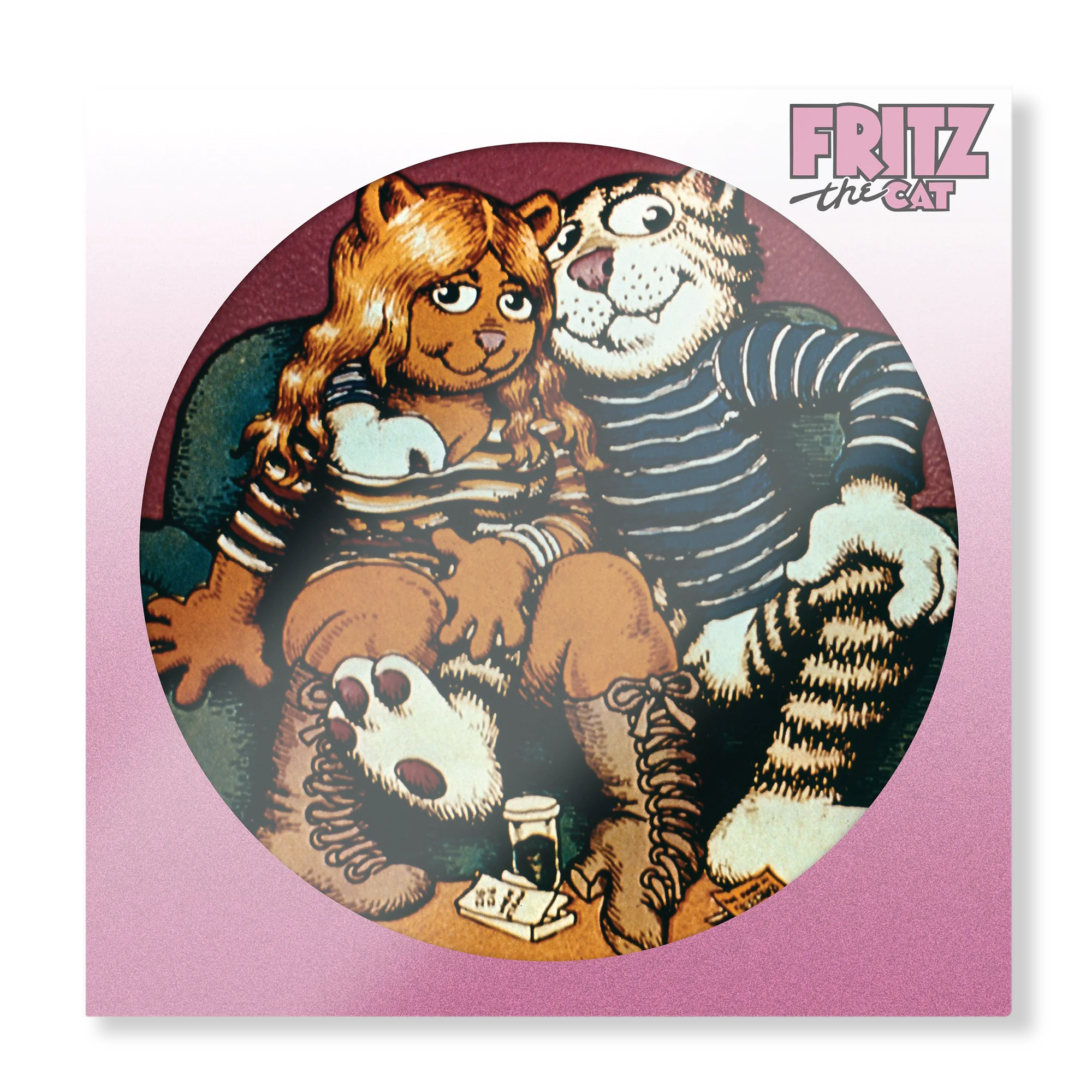
Various Artists – Fritz the Cat – Original Soundtrack Recording – Picture Disc Vinyl Record
The soundtrack to Fritz the Cat is an unusually vivid mixture of jazz, blues, rhythm and blues, and original film music. Ralph Bakshi’s 1972 animated feature brought Robert Crumb’s character into an adult cinematic setting, and the soundtrack reflects that collision of cartoon imagery with a more complicated urban world. Rather than relying on a single musical style, the album places established performers beside the score written by Ed Bogas and Ray Shanklin. The changes of voice and texture are part of its character, moving between street-level energy, smoky atmosphere and the heightened situations of the film.
Charles Earland’s “Black Talk” opens the program with the grounded pulse of organ jazz. Cal Tjader’s “Mamblues” adds another rhythmic color, while Bo Diddley’s self-titled recording brings one of rock and roll’s most recognizable musical signatures into the sequence. These selections connect the soundtrack to existing records with strong identities of their own. They also prevent the original score from becoming isolated in a purely cinematic world. The album keeps reaching outward toward the musical environments surrounding the story, allowing the established songs to suggest social spaces, attitudes and histories beyond what is shown on screen.
Bogas and Shanklin’s pieces do much of the connective work. “Duke’s Theme,” “Fritz the Cat” and “Bertha’s Theme” help define characters and situations, while “Winston,” “House Rock” and “The Synagogue” move the second side through markedly different settings. The score is flexible enough to sit beside the outside recordings without sounding like an unrelated insert. Its themes can supply humor, tension or atmosphere in relatively brief spans, giving the soundtrack the shifting proportions of a film narrative while preserving enough musical identity for the cues to work independently.
Billie Holiday’s “Yesterdays” introduces a particularly striking change of emotional temperature. The familiarity and depth of her performance create a different kind of space from the more immediately rhythmic selections. The Watson Sisters’ “Love Light of Mine” adds another vocal presence before the program returns to Bogas and Shanklin for “The Riot” and “You’re the Only Girl (I Ever Really Loved).” Those juxtapositions are what make the album interesting as a collection. It is not a unified studio session, and it does not need to be; the relationships between its contrasting recordings carry much of the appeal.
This picture disc vinyl edition presents the thirteen-track original soundtrack program, combining the music with imagery associated with the film. It is a distinct release from later collections pairing Fritz the Cat with other Bakshi-related scores. The album will particularly interest listeners who enjoy the meeting point between early-1970s cinema, soul jazz and archival rhythm and blues. Its strongest feature is the way the original cues and established recordings coexist, offering both a recognizable document of the film’s atmosphere and a varied sequence of music with an identity beyond the screen.
Brand new, never played and still sealed in the factory plastic
Track Listing
A1. Charles Earland – Black Talk
A2. Ed Bogas and Ray Shanklin – Duke’s Theme
A3. Ed Bogas and Ray Shanklin – Fritz the Cat
A4. Cal Tjader – Mamblues
A5. Bo Diddley – Bo Diddley
A6. Ed Bogas and Ray Shanklin – Bertha’s Theme
B1. Ed Bogas and Ray Shanklin – Winston
B2. Ed Bogas and Ray Shanklin – House Rock
B3. Ed Bogas and Ray Shanklin – The Synagogue
B4. Billie Holiday – Yesterdays
B5. The Watson Sisters – Love Light of Mine
B6. Ed Bogas and Ray Shanklin – The Riot
B7. Ed Bogas and Ray Shanklin – You’re the Only Girl (I Ever Really Loved)



Reviews
There are no reviews yet.