Description
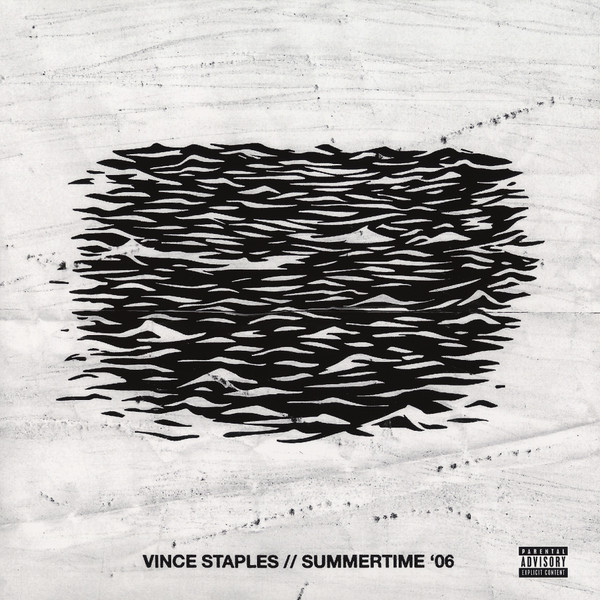
Vince Staples – Summertime ’06 (Segment 2) – Vinyl Record
Vince Staples’ Summertime ‘06, released in 2015, is an album that solidified his reputation as one of the most uncompromising and intelligent voices in contemporary hip-hop. While the first segment of the album introduces listeners to his world with fast-moving, raw depictions of Long Beach life, gang culture, and the fleeting innocence of youth, the second segment slows the pace and digs deeper into the aftermath of violence, trauma, and emotional numbness. If the first half is the story of a summer that changes everything, the second half feels like the long, dark echo that follows—less immediate, more meditative, and far more unsettling in its restraint. Through this structure, Staples not only tells a story of personal coming-of-age but also presents a larger commentary on the cyclical nature of violence and the way young lives are shaped and often crushed by forces beyond their control.
The second segment begins with “Ramona Park Legend, Pt. 2,” a ghostly reprise that immediately sets the mood. Where the earlier tracks were full of energy and momentum, this short interlude is haunting and almost spectral, suggesting that the “legend” of Ramona Park—Staples’ home turf—is less about glory and more about memory, loss, and inevitability. From there, “Street Punks” and “Hang N’ Bang” plunge listeners back into the raw realities of gang life, but without the bravado that often defines rap songs about the streets. Instead, they carry a sense of menace and inevitability, as if the violence described is not a choice but a condition of existence. Staples’ delivery is detached, almost cold, mirroring the way living in such an environment demands emotional armor. His verses are vivid but deliberately stripped of sentiment, forcing listeners to confront the ugliness head-on.
As the album unfolds, the thematic weight deepens with tracks like “C.N.B.,” which bluntly addresses gang identity and survival, and “Loca,” a song that juxtaposes a strangely danceable rhythm with dark subject matter about toxic relationships and instability. This contrast between infectious production and bleak storytelling is one of the defining characteristics of Segment 2—it draws listeners in with its sound but refuses to let them escape the gravity of its themes. “Dopeman,” featuring Joey Fatts and Kilo Kish, is another standout, with Kish’s eerie, floating hook underscoring the bleakness of a narrative centered on the drug trade as both a hustle and a destructive cycle that poisons entire communities. The song avoids any glamorization of the lifestyle, instead painting it as another symptom of systemic neglect and economic desperation.
The segment closes with “Let It Shine,” one of the most chilling tracks of Vince Staples’ career. By taking the children’s gospel refrain “this little light of mine” and twisting it into something ironic and almost mocking, Staples emphasizes the futility of trying to maintain hope or innocence in an environment that systematically extinguishes both. It’s a haunting conclusion, not only to the second segment but to the entire double album, and it leaves the listener with a sense of unease. There’s no resolution, no redemption—just the stark reality of a life where shining is dangerous and survival itself is a fragile accomplishment.
What makes Segment 2 so powerful is its emotional and sonic restraint. Whereas the first segment often bursts with tension, adrenaline, and the bravado of youth, the second feels quieter, heavier, and more contemplative. No I.D.’s minimalist production mirrors this perfectly, building soundscapes out of sparse drums, eerie atmospherics, and empty space that reflect the desolation in Staples’ lyrics. This stripped-down aesthetic allows the words to take center stage, highlighting Staples’ ability to tell complex stories with sharp precision. The overall effect is suffocating yet captivating, forcing listeners to sit with discomfort rather than offering easy catharsis.
In the broader cultural context, Summertime ‘06 challenged and redefined the sound of West Coast hip-hop in the mid-2010s. While many of Staples’ contemporaries leaned into nostalgia, funk revival, or glossy production, he offered something stark, modern, and deeply unsettling. Segment 2, in particular, resists any attempt at romanticizing gang life or community struggle; instead, it reads like a bleak chronicle, an unflinching portrait of lives caught in cycles of violence, poverty, and systemic failure. The emotional numbness of this half of the album underscores the lasting psychological effects of that environment. For Vince Staples, this is not about glorification or victimhood—it’s about survival, truth-telling, and reclaiming his story in his own terms.
Segment 2 of Summertime ‘06 is what makes the album feel complete. It balances the raw immediacy of the first half with a deeper, darker meditation on its consequences, ensuring that the listener doesn’t just hear the story of a summer gone wrong but feels the weight of living through its aftermath. In doing so, Vince Staples crafted not just a debut album but a statement of purpose—one that remains as chilling and relevant today as it was upon release.
Brand new, never played and still sealed in the factory plastic
Track Listing
Ramona Park Legend Pt. 2
3230
Surf
Might Be Wrong
Get Paid
Street Punks
Hang N’ Bang
C.N.B.
Like It Is
’06