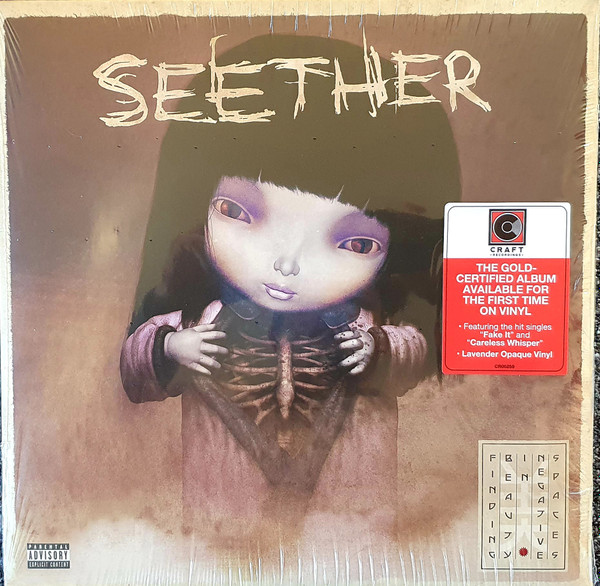
Description
Seether – Finding Beauty In Negative Spaces – Lavender Opaque Vinyl Record
Finding Beauty in Negative Spaces, released on October 23, 2007, is the third studio album by South African post-grunge/alternative metal band Seether. It marked a pivotal moment in the band’s career—both musically and personally—coming in the wake of significant internal and external challenges, including the departure of guitarist Pat Callahan, frontman Shaun Morgan’s stint in rehab, and his very public breakup with singer Amy Lee (of Evanescence). These circumstances deeply inform the album’s emotional weight, lyrical themes, and raw sonic intensity.
The album’s title itself—Finding Beauty in Negative Spaces—reflects a kind of emotional dualism, a search for hope, purpose, or catharsis amid pain and personal chaos. Lyrically, Morgan digs deep into themes of loss, anger, self-doubt, addiction, failed relationships, and recovery, but always through a lens that seeks resolution or, at the very least, release. This balance between darkness and melodic accessibility became one of the album’s defining strengths.
The album blends Seether’s post-grunge roots with hard rock, alt-metal, and more melodic, hook-driven songwriting than on previous releases. It’s heavier than Karma and Effect (2005) in terms of emotional content, yet more refined and commercially polished, thanks in part to producer Howard Benson, known for his work with My Chemical Romance, Three Days Grace, and P.O.D.
The breakout hit was “Fake It,” a sarcastic, riff-heavy critique of inauthenticity and image culture, which topped the Billboard Mainstream Rock chart and became one of Seether’s biggest radio successes. Another standout is “Rise Above This,” a soaring, emotionally direct anthem written by Morgan about his brother Eugene, who died by suicide shortly before the album’s release. The song, originally intended as a message of encouragement, became a powerful eulogy and resonated deeply with fans for its vulnerability and hopeful tone. “Breakdown” also charted well, showcasing the band’s melodic instincts and Morgan’s introspective lyrical style.
One of the more controversial and emotionally raw songs is “Like Suicide,” which channels grief and frustration into a heavy, cathartic blast of aggression. The album also features “No Jesus Christ,” an ambitious, theatrical track filled with biting sarcasm and dynamic shifts, addressing themes of hypocrisy and moral grandstanding. Even the more subdued tracks like “Walk Away from the Sun” and “Eyes of the Devil” carry a haunting atmosphere, adding depth and nuance to the band’s typical heavy sound.
The album’s artwork—a stylized pink and white cartoon figure created by David Ho—was notably more colorful and surreal than the typical dark aesthetic associated with alternative metal, signaling Seether’s embrace of contrast: finding light in darkness, beauty in ugliness, and softness amid heaviness.
Finding Beauty in Negative Spaces was both a critical and commercial success, debuting at #9 on the Billboard 200 and earning platinum certification. It marked a turning point where Seether not only refined their sound but also found a wider audience, thanks to the emotional honesty and melodic accessibility of its best tracks. More importantly, it established Shaun Morgan as a compelling, confessional songwriter unafraid to confront mental health, addiction, and grief in a genre often dominated by angst without introspection.
The album remains one of Seether’s most cohesive and emotionally resonant works, blending angst with artistry, heaviness with melody, and trauma with transformation. For fans of post-grunge, alternative rock, or emotionally charged hard rock, Finding Beauty in Negative Spaces stands as a defining album of the late 2000s.
Side D is etched.
Brand new, never played and still sealed in the factory plastic
Track Listing
Like Suicide
Fake It
Breakdown
FMLYHM
Fallen
Rise Above This
No Jesus Christ
Six Gun Quota
Walk Away From The Sun
Eyes Of The Devil
Don’t Believe
Waste