Description
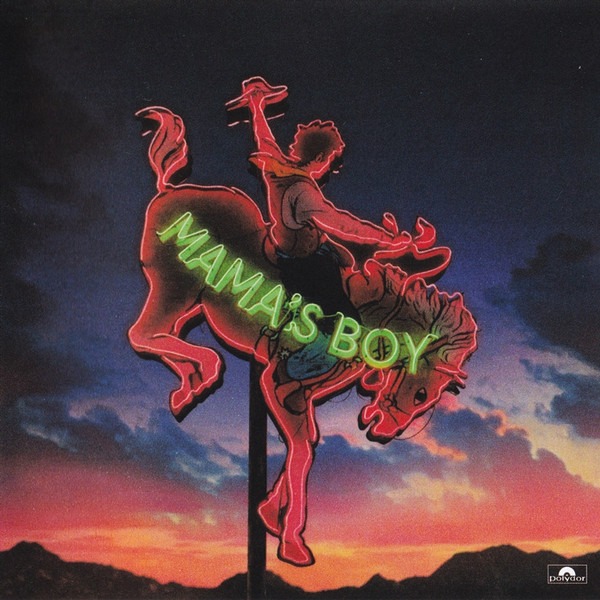
LANY – Mama’s Boy – Compact Disc
Mama’s Boy feels like a band trying to scale up emotionally and sonically at the same time—taking the intimate, synth-heavy bedroom pop identity that defined LANY and stretching it into something closer to arena pop, country-tinged pop, and widescreen nostalgia. It’s not a clean transformation, and that tension is what defines the album.
At its core, LANY’s sound has always been built on minimalist electronic pop—soft synths, airy vocals, and emotional directness. But here, that foundation gets layered with new textures: acoustic guitars, piano ballads, bigger drum sounds, and occasional country influences. You can hear the intention clearly—they’re reaching for something more expansive, something that feels less confined to headphones and more suited to open space.
The interesting part is how those two identities interact. Some tracks lean fully into classic LANY territory—mid-tempo, synth-driven, emotionally soft, almost weightless. Others push into more traditional songwriting, with clearer structures, bigger choruses, and more organic instrumentation. The album moves between those modes rather than fully committing to one, which gives it range but also a sense of internal push-and-pull.
Paul Klein stays consistent with what the band has always done: breathy, restrained, and emotionally transparent delivery. He doesn’t project power—he leans into vulnerability. His voice often sits just above the instrumentation, sometimes blending into it, which reinforces the album’s introspective tone. Even when the production gets bigger, the vocal approach doesn’t change dramatically, and that contrast becomes a defining feature.
Mama’s Boy is heavily centered on nostalgia, identity, relationships, and upbringing, with a specific emphasis on family and roots—something that’s more explicit here than on previous albums. There’s a recurring sense of looking backward—small-town imagery, personal memories, and emotional reflection tied to place and experience. The writing is simple, direct, and repetitive, which fits the band’s style but can occasionally feel overly familiar.
What gives the album its personality is how it handles space and mood. Even when the instrumentation expands, there’s still a lot of openness in the mix. Songs don’t feel crowded—they feel stretched out, almost cinematic in places. That works especially well on the slower tracks, where the combination of piano, ambient textures, and minimal percussion creates a sense of distance.
At the same time, the album’s ambition creates some unevenness. The shift toward bigger, more anthemic moments doesn’t always align perfectly with the band’s naturally understated style. When it works, it adds dimension. When it doesn’t, it can feel like the production is aiming for more than the songwriting is delivering.
From a broader perspective, Mama’s Boy sits in that space where an artist tries to expand without losing identity. LANY doesn’t abandon their core sound—they stretch it, test its limits, and see how far it can go into different genres and scales. The result is an album that feels transitional, even if it’s not officially framed that way.
It’s also worth noting how much the album relies on feeling over structure. These aren’t songs built on complex ideas or technical shifts—they’re built on mood, repetition, and emotional tone. That makes them easy to connect with, but also means the album leans heavily on atmosphere rather than variation.
In the end, Mama’s Boy isn’t about reinvention or precision—it’s about expansion and identity testing. It captures a band in the middle of figuring out how big their sound can get without losing what made it work in the first place.
Expansive, nostalgic, and mood-driven. Mama’s Boy blends synth-pop roots with acoustic and country influences, aiming for a larger emotional and sonic scope while holding onto LANY’s core sense of intimacy.
Brand new, never played and still sealed in the factory plastic
Track Listing
You!
Cowboy In LA
Heart Won’t Let Me
If This Is The Last Time
I Still Talk To Jesus
Paper
Good Guys
Sharing You
Bad News
When You’re Drunk
Anything 4 U
Sad
(What I Wish Just One Person Would Say To Me)
Nobody Else