Description
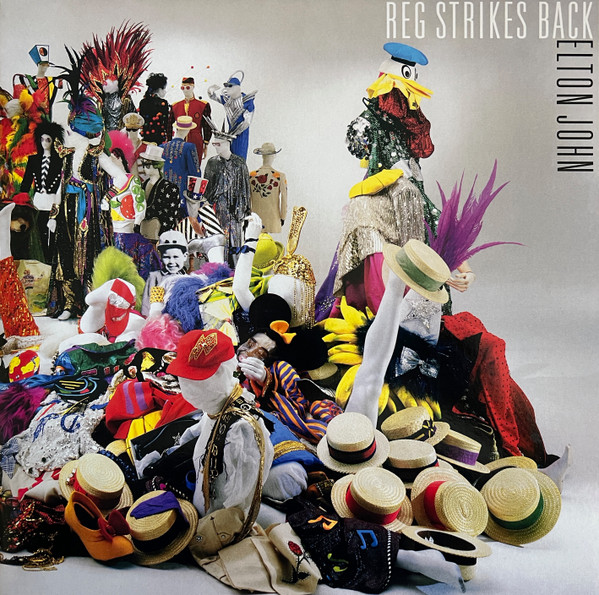
Elton John – Reg Strikes Back – 180 Gram Vinyl Record
A Comeback Album that Reclaimed His Place in Pop and Rock
Released in June 1988, Reg Strikes Back is the 21st studio album by legendary British singer, songwriter, and pianist Elton John. The record is widely regarded as one of his most important comeback albums of the 1980s, marking a turning point in his career after a turbulent period that included health struggles, declining chart success, and heavy media scrutiny. The title, Reg Strikes Back, is a clever nod to Elton’s birth name, Reginald Kenneth Dwight, and serves as a defiant statement of renewal, resilience, and determination to prove that he remained a vital creative force in the music industry. More than just a witty title, the album reflects Elton’s ability to adapt to the pop-rock sound of the late 1980s while maintaining his trademark emotional depth, melodic strength, and partnership with lyricist Bernie Taupin.
By the mid-1980s, Elton John had endured a career slump. Though he was still selling out live performances around the world, his studio albums were struggling to make the same impact they had during his golden era of the 1970s. In 1987, Elton underwent vocal cord surgery, a serious procedure that left fans and critics wondering if he would ever sing with the same power again. The release of Reg Strikes Back was designed to silence those doubts. Not only did the album reintroduce Elton’s voice with renewed clarity and strength, but it also reunited him with key members of his classic band lineup, including Nigel Olsson on drums, Dee Murray on bass, and Davey Johnstone on guitar. Produced by Chris Thomas, who had worked with Elton since the early ’70s, the record embraced the sleek, digital production styles of the decade while still carrying the warmth and musicianship of his earlier recordings.
Reg Strikes Back is a confident mix of synth-driven pop anthems, rock-tinged grooves, and heartfelt ballads. The album’s biggest success was the infectious single “I Don’t Wanna Go On with You Like That,” which became Elton’s highest-charting U.S. single of the decade, peaking at No. 2 on the Billboard Hot 100. Built on a driving electronic beat and sharp, biting lyrics about a failing relationship, the track exemplified Elton’s ability to modernize his sound without losing his emotional punch. Another standout is “A Word in Spanish,” a beautifully melodic ballad that reached the Top 20 in the U.S. and remains a fan favorite for its romantic, understated delivery. The album opens with “Town of Plenty,” an energetic declaration that sets the confident tone of the record. Other highlights include “Heavy Traffic” and “Poor Man’s Son,” which show off Elton’s playful, groove-oriented side, and “Japanese Hands,” a more experimental ballad that highlights Bernie Taupin’s penchant for rich, poetic imagery. Perhaps most intriguing is “Mona Lisas and Mad Hatters (Part Two),” a sequel to Elton’s 1972 classic, revisiting New York City with a more mature and reflective perspective.
Commercially, Reg Strikes Back was a solid success that reestablished Elton John as a chart presence in the late 1980s. The album reached No. 16 on the Billboard 200 in the United States and was certified Gold, while also performing well in the UK, where it peaked at No. 18. For an artist whose chart dominance had seemed uncertain just a year earlier, these achievements marked a decisive comeback. More importantly, the record reaffirmed Elton’s ability to produce hit singles and adapt to changing musical trends without losing his artistic identity. The success of the album and its singles set the stage for Elton’s stronger commercial run in the 1990s, beginning with Sleeping with the Past (1989), which gave him a No. 1 single in the UK with “Sacrifice.”
Reg Strikes Back was welcomed as a return to form. Reviewers praised Elton’s revitalized vocals after surgery, Bernie Taupin’s biting yet poignant lyrics, and the overall energy of the record. While some critics noted that the digital production and synth-heavy sound firmly anchored it in the 1980s, many saw this as Elton’s proof that he could remain relevant in a pop music landscape increasingly dominated by younger acts. The record was described as one of his best albums of the decade, a refreshing change from some of the uneven releases earlier in the 1980s.
In terms of legacy, Reg Strikes Back occupies a special place in Elton John’s discography. It may not carry the historical weight of classics like Goodbye Yellow Brick Road (1973) or Captain Fantastic and the Brown Dirt Cowboy (1975), but it represents a crucial transitional moment. The album’s success reaffirmed Elton’s staying power, silenced critics who doubted his voice or relevance, and paved the way for a string of strong albums and singles that would follow. Its defiant title remains symbolic of Elton’s enduring resilience in the face of personal and professional challenges. For fans and music historians, Reg Strikes Back is an album that captures Elton John’s ability to reinvent himself while staying true to his unique blend of pop, rock, and heartfelt storytelling.
For listeners exploring Elton John’s 1980s discography, Reg Strikes Back serves as a gateway into his late-career resurgence. It bridges the gap between his uneven early ’80s albums and his revitalized 1990s work, offering a snapshot of an artist who refused to fade into the background. It’s an album that showcases resilience, creativity, and adaptability—themes that define Elton John’s entire career.
Brand new, never played and still sealed in the factory plastic
Track Listing
Town Of Plenty
A Word In Spanish
Mona Lisas And Mad Hatters (Part Two)
I Don’t Wanna Go On With You Like That
Japanese Hands
Goodbye Marlon Brando
The Camera Never Lies
Heavy Traffic
Poor Cow
Since God Invented Girls