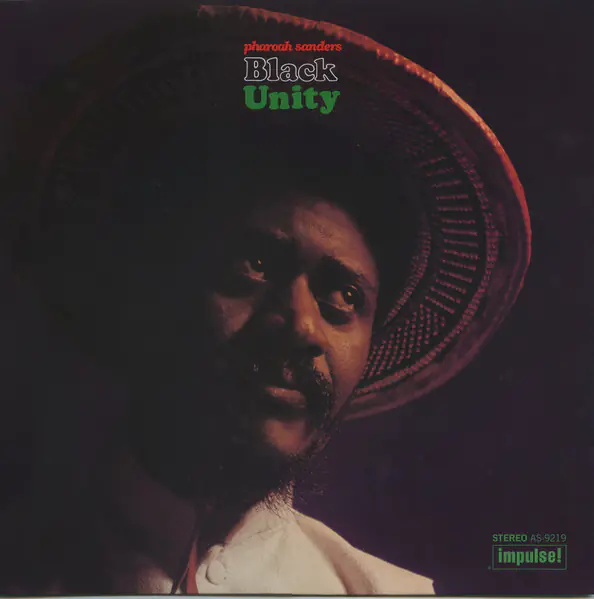
Description
Pharoah Sanders – Black Unity – 180 Gram Vinyl Record
Black Unity is one of the most powerful and spiritually charged recordings by Pharoah Sanders, released in 1971 during a period when spiritual jazz was reaching new heights of artistic and cultural significance. Consisting of a single extended composition that occupies the entire album, Black Unity is both a musical journey and a profound statement of collective identity, liberation, spirituality, and cultural pride. It stands among Sanders’ most important works and remains a landmark recording in the history of spiritual and avant-garde jazz.
By the early 1970s, Sanders had become one of the leading voices in jazz’s spiritual movement. Having worked closely with John Coltrane during the final years of Coltrane’s life, Sanders carried forward many of the exploratory and transcendent qualities associated with Coltrane’s later music. Yet Sanders developed his own distinctive approach, combining ecstatic improvisation, African and global musical influences, meditative repetition, and deeply emotional expression into a unique artistic language.
The title Black Unity immediately signals the album’s central theme. Created during a period of heightened cultural awareness and political activism, the work reflects ideas of solidarity, self-determination, and shared identity within the African diaspora. However, the concept of unity explored in the music extends beyond politics alone. Sanders envisions unity as spiritual, communal, and universal—a force capable of connecting individuals across cultural, social, and geographical boundaries.
Musically, the album unfolds as a continuous suite rather than a collection of separate pieces. This structure allows Sanders and his ensemble to develop ideas organically over an extended period, creating a sense of flow and evolution. The performance moves through multiple moods and textures, yet maintains a strong sense of coherence and purpose throughout its duration.
One of the defining features of Black Unity is its rhythmic foundation. Drawing inspiration from African musical traditions, the ensemble creates layered polyrhythms that serve as both a grounding force and a source of momentum. Percussion plays a central role in the music, generating an almost ceremonial atmosphere that encourages collective participation and spiritual engagement. These rhythms provide the framework upon which the improvisations unfold.
Sanders’ tenor saxophone serves as the emotional and spiritual voice of the album. His playing ranges from gentle, meditative passages to moments of intense, ecstatic expression. Known for his powerful tone and ability to convey profound emotion, Sanders approaches improvisation not merely as technical display but as a form of communication and spiritual exploration. His solos often feel less like performances than acts of searching, discovery, and revelation.
The ensemble contributes equally to the album’s impact. Rather than functioning as accompanists, the musicians participate in a collective process of creation. Bass, percussion, keyboards, and additional instruments interact continuously, creating a rich and evolving musical environment. This emphasis on collaboration reinforces the album’s central message of unity, demonstrating how individual voices can contribute to a larger communal expression.
A notable aspect of Black Unity is its balance between structure and freedom. While the music is rooted in recurring rhythmic and melodic ideas, it also allows significant room for improvisation and spontaneous development. This combination creates a listening experience that feels both grounded and expansive, reflecting the tension between individuality and collective identity that lies at the heart of the album’s concept.
The influence of African musical traditions is especially significant throughout the recording. Sanders was among a generation of jazz musicians who sought to reconnect with African cultural roots, incorporating rhythmic concepts, spiritual perspectives, and communal approaches to music-making into their work. Black Unity stands as one of the clearest and most successful examples of this artistic vision, celebrating cultural heritage while remaining forward-looking and innovative.
Emotionally, the album is both uplifting and transformative. While moments of intensity and urgency appear throughout the performance, the overall effect is one of affirmation and possibility. Sanders creates music that invites listeners to participate in a shared experience of reflection, empowerment, and connection. This sense of collective purpose is one reason the album continues to resonate with audiences decades after its release.
Upon release, Black Unity was widely praised within jazz circles and has since become recognized as a cornerstone of spiritual jazz. Critics and historians have highlighted its ambitious scope, powerful message, and innovative fusion of jazz improvisation with African-inspired rhythms and spiritual themes. Over time, it has earned a reputation as one of Sanders’ greatest achievements and one of the essential recordings of the era.
The album’s influence extends far beyond jazz. Its emphasis on community, spirituality, and cultural identity has inspired musicians across genres, from experimental music and world music to hip-hop and contemporary improvisation. Its themes remain relevant in discussions of art, culture, and social consciousness, ensuring its continued importance for new generations of listeners.
With its hypnotic rhythms, transcendent improvisation, and profound sense of purpose, Black Unity stands as one of the defining masterpieces of spiritual jazz. The album captures Pharoah Sanders at the height of his creative powers, using music as a vehicle for healing, connection, and transformation. Powerful, visionary, and deeply moving, Black Unity remains a timeless expression of collective strength and spiritual possibility.
Brand new, never played and still sealed in the factory plastic
Track Listing
Black Unity (Part I)
Black Unity (Part II)