
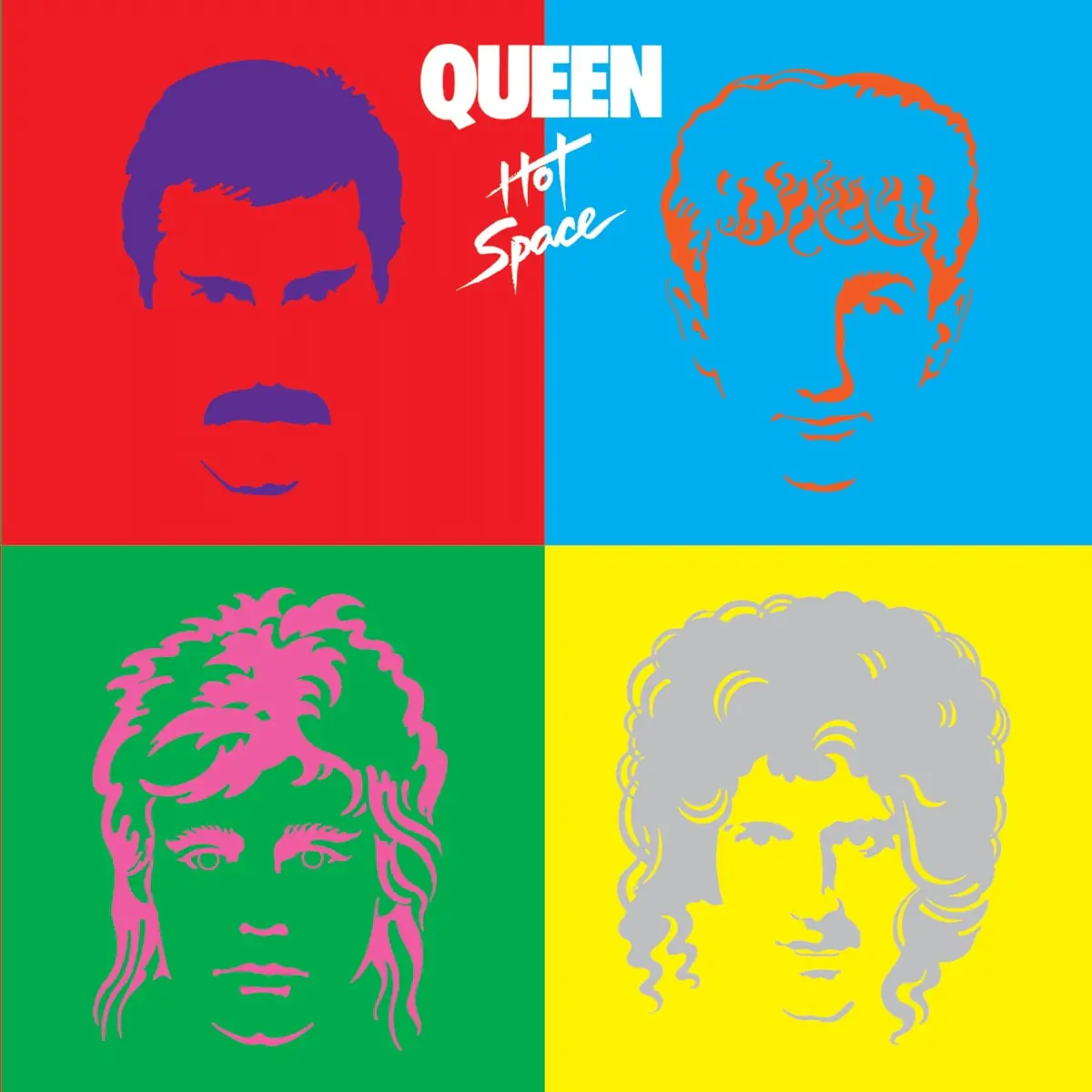
Description
Queen – Hot Space – Vinyl Record
Hot Space is Queen’s most deliberate break with the sound expected of the band at the beginning of the 1980s. Released in 1982, it places bass guitar, synthesizers, drum machines, and clipped dance rhythms ahead of the massed guitars associated with the group’s 1970s work. The decision was divisive, but it was not casual. “Another One Bites the Dust” had revealed how naturally John Deacon’s sense of space could work on the dance floor, and Hot Space explores that opening across a full album. Brian May’s guitar remains present, though often as color or punctuation rather than the foundation of every arrangement.
“Staying Power” begins with Freddie Mercury’s electronic bass pattern and a horn arrangement by Arif Mardin, announcing the new priorities immediately. “Dancer” and “Back Chat” continue with taut grooves, the latter driven by Deacon’s writing and a rhythm that leaves unusual amounts of room around Mercury’s voice. “Body Language” is even more minimal, built from synthesizer bass, breath, and repetition. These tracks can surprise listeners expecting “Tie Your Mother Down,” but they demonstrate Queen’s confidence in making a record where physical rhythm is the main event.
Roger Taylor’s “Action This Day” closes the first side with a sharper rock edge and guest saxophone, creating a bridge to the album’s more varied second half. “Put Out the Fire” brings May’s guitar forward in a song whose anti-gun lyric cuts against the swagger of the riff. “Life Is Real (Song for Lennon)” is Mercury’s direct memorial to John Lennon, deliberately plain and reflective. Taylor’s “Calling All Girls” then combines rock guitar with an electronic pulse, showing that the band’s older and newer methods could coexist within the same arrangement.
“Las Palabras de Amor (The Words of Love)” provides one of the album’s most enduring melodies, with May writing toward Latin American audiences who had embraced Queen so passionately. “Cool Cat,” sung in Mercury’s light falsetto over Deacon’s spare groove, is the record at its most relaxed. The closing “Under Pressure,” created with David Bowie, rises beyond the album’s stylistic debate. Deacon’s bass line, the improvised vocal exchange, and the lyric’s appeal for compassion make it one of the defining recordings in both artists’ catalogs.
Hot Space makes the most sense when heard as an experiment by a band that had already mastered several forms of rock spectacle. It contains tensions—between programmed and live rhythm, restraint and excess, group identity and individual writing—but those tensions are the subject of the record as much as a flaw to be solved. Later pop and rock artists would treat funk, electronic production, and heavy guitar as natural companions. Queen reached for that mixture early, and this original eleven-song vinyl program remains one of the boldest, strangest detours in a career built on refusing fixed boundaries.
Brand new, never played and still sealed in the factory plastic







Reviews
There are no reviews yet.